

Uncovering JAPA
Do Canadian Municipal Climate Action Plans Empower Underserved Communities?
The Journal of the American Planning Association (JAPA) turns research into action. All APA members have access to JAPA and its full archive.
summary
- Climate action plans in three cities in Ontario, Canada, generally prioritize environmental and economic goals, with limited attention to systemic inequities and underserved communities.
- Interviews revealed that equity-deserving groups frequently feel excluded from climate-related decision-making. Climate action can advance justice by addressing not only climate impacts but also the underlying inequities that make some communities more vulnerable.
- The study's author used a four-part framework for assessing equity in climate change planning looking at distributive justice, procedural justice, recognition justice and healing justice (a newly developed category by the author).
Cities' large energy consumption and emissions make them key players in climate action. In Canada, roughly half of greenhouse gas emissions are under the direct or indirect control of municipal governments. While they are well-positioned to plan for decarbonization, a just transition requires centering equity in local plans. Municipalities need concrete guidance on how to bring equity to the forefront of their climate action plans.
In "The Big Ship Turns Around Slowly: An Evaluation of Equity and Justice in Ontario Climate Action Plans" (Journal of the American Planning Association Vol. 92, No. 2) Kayleigh Swanson uses an equity and justice framework to evaluate climate action plans for three Canadian cities in Ontario.
Climate-Action Plans Selected for Study
Swanson sought out municipalities that were recently identified as having strong climate action plans as well as higher demographic diversity. The climate-action plans for the study included:
-
Waterloo Region, Ontario
-
Community Climate Adaptation Plan for Waterloo Region (2019)
-
TransformWR: Waterloo Region’s Transition to an Equitable, Prosperous, Resilient Low Carbon Community (2022)
-
-
Brampton, Ontario
-
Community Energy and Emissions Reduction Plan (2020)
-
Grow Green Environmental Master Plan (2020)
-
-
Thunder Bay, Ontario
-
Climate-Ready City: City of Thunder Bay Climate Adaptation Strategy (2015)
-
Climate-Forward City: City of Thunder Bay Net-Zero Strategy (2020)
-
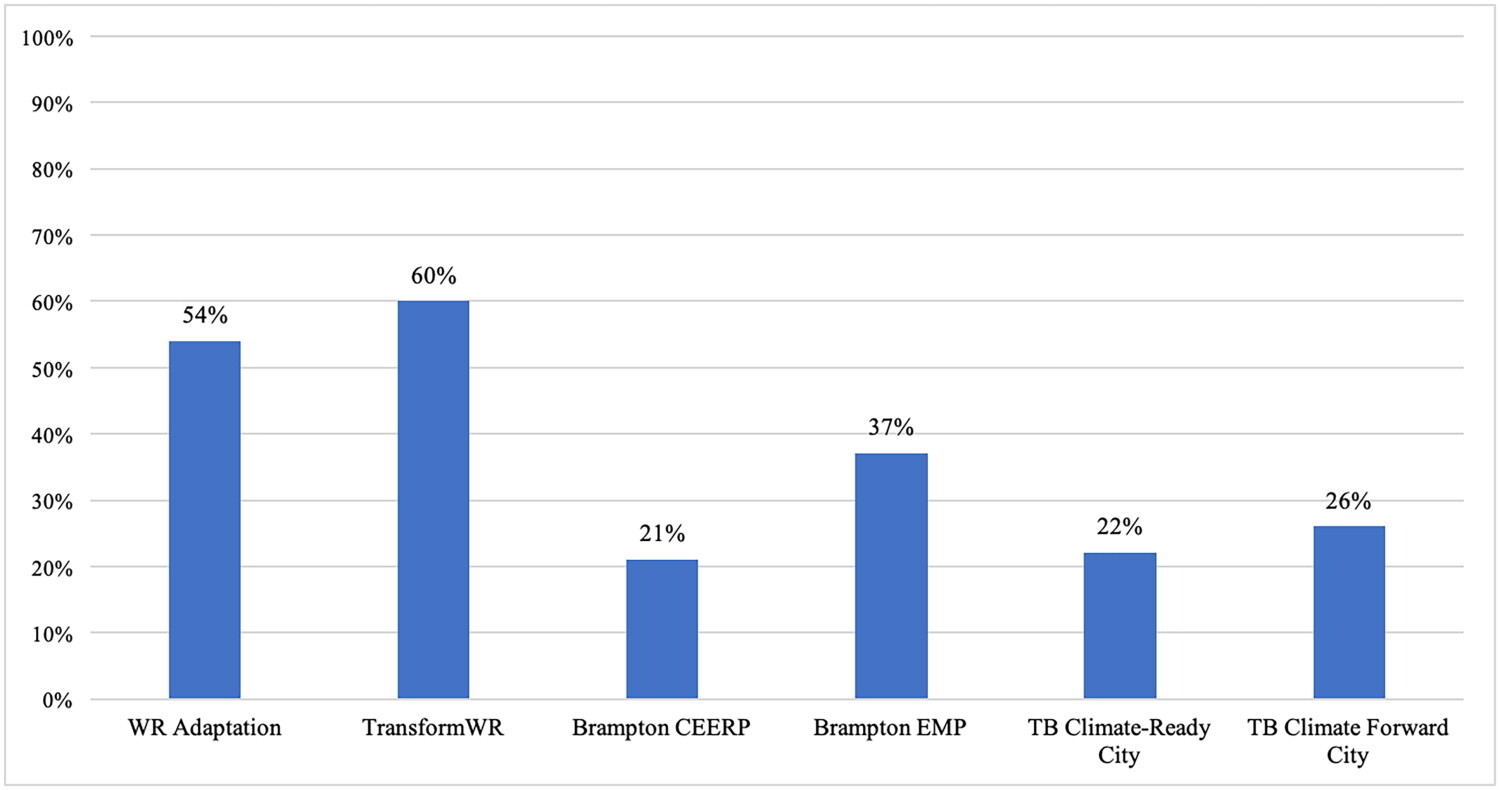
Figure 1: Percentage of total possible points achieved across all criteria (by city). (Credit: Author)
How Canadian Climate Plans Lack Equity
The study included six plans and 26 interviews across three municipalities. The plan evaluation revealed that municipalities tend to focus on economic and environmental goals. Equity is often left as an after-thought. For example, Brampton's Community Energy and Emissions Reduction Plan does not identify at-risk populations or neighborhoods. Its discussion of community impacts mainly focuses on disruptions to the local economy.
Plans typically do not mention systemic injustice or identify strategies to address these root causes. While the TransformWR plan acknowledges the role of structural oppression in creating vulnerability to climate change, it does not elaborate on how specific structures have been perpetuated in Waterloo Region or explain how the consequences of structural oppression play out locally.
When equitable policies are described, interviewees from these municipalities stressed that good intentions do not necessarily translate to meaningful actions. This disconnect between rhetoric and action was made clear to the author when considering procedural justice. Plans tended to score well in this category — however interviews revealed underserved groups' consistent frustration with being left out of decision-making.
"I speak to various governments and organizations all the time. Do I feel that I’m listened to? No," said an interviewee in Waterloo Region.
In Brampton, 57% of interviewees believed equity-deserving (underserved) groups are left out of decision-making processes on matters that affect them. In the Waterloo Region and city of Thunder Bay, this number rose to 88% and 100%, respectively. Future research could investigate the specific points in the planning process where this procedural disconnect occurs.
Community Voices Inform the Analysis
In addition to a repeated point-scoring Delphi exercise evaluating the plans, the study featured 26 semi-structured interviews. These interviews illuminated what equity means to the groups consulted and what justice-oriented policymaking processes and outcomes entail from their perspective. Participants were advocates and representatives from organizations that serve equity-deserving groups in the Waterloo Region, and cities of Brampton and Thunder Bay. They were selected using a strategic sampling method targeting individuals in senior leadership positions.
Where Equity is Highlighted
Swanson notes strong sections of the plans in this study. A key strength in the TransformWR plan is its equitable consideration of transit needs. The plan aligns with interviewee feedback in its promotion of community services and subsidized housing in central areas with access to public transit.
Policy coherence was notable in the two other municipalities. Thunder Bay's Climate-Ready City adaptation strategy integrates across existing plans and policies to bridge departments and build on existing strengths. Brampton's Community Energy and Emissions Reduction Plan refers to the municipal Environmental Master Plan and other supportive strategies and programs. This suggests some degree of plan integration and alignment.
Evaluation Framework for Assessing Plans
This study operates on the premise that climate change planning can address the root causes of disparate vulnerability to transform unfair power relations and improve the wellbeing of underserved communities. Swanson used a four-part framework that contained criteria for assessing equity in climate change planning:
-
Distributive justice– how benefits and burdens are shared among members of society.
-
Procedural justice– fair and inclusive decision-making processes.
-
Recognition justice– how social, political, and economic forces influence the distribution of power and resources.
-
Healing justice– enabling historically underserved groups to transcend legacies of oppression.
While the first three criteria are commonly used to assess equity, the healing justice category was newly developed by the Swanson for this study.
Top image: iStock/Getty Images Plus/ redtea