Equity in Practice
Bringing More Voices Into Planning
summary
- The city of Cortez, Colorado, was awarded a $100,000 grant from the Orton Family Foundation's Community Heart & Soul initiative to reach residents who had been largely absent from the planning process, with a particular focus on the city's Latino community.
- Planners worked with community "connectors" to conduct bilingual outreach and organized neighborhood events to bring the planning process to residents.
- The effort gave previously underrepresented residents a greater voice in the city's future, with their input influencing land use, public spaces and other city decisions and projects.
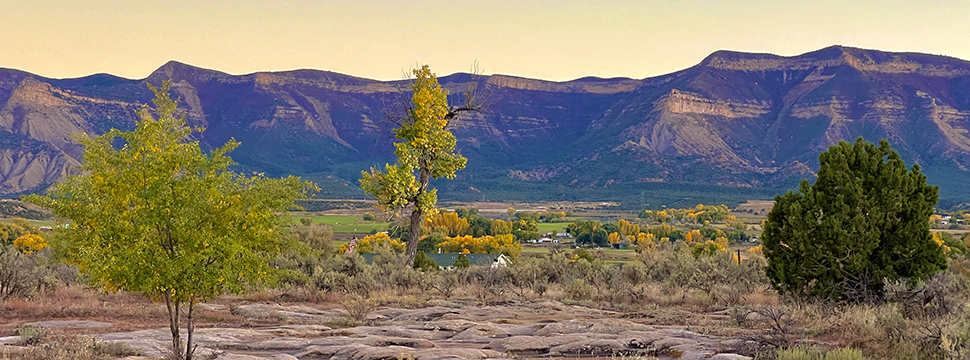
Cortez, a municipality of fewer than 9,000 people, sits in southwestern Colorado near Mesa Verde National Park, an UNESCO World Heritage Site where more than 4,000 ancestral Pueblo cliff dwellings are identified. While Mesa Verde is a gateway to the past, Cortez is its modern neighbor, and an increasingly diverse community. Today, Latino residents make up nearly 20% of the municipality's overall population.
Missing from the Planning Process
Despite the growth of the Latino community in Cortez, their presence in civic life, particularly decision making in the planning process, was largely absent. When the city began a comprehensive planning effort in 2007, Latino residents, along with Native American residents, young people and residents living in poverty, did not participate in the process. Residents were invited to participate, however, turnout was poor.
The issue was not lack of interest, but the Latino community's desire to insulate themselves from local institutions. Monica Palmquist, who moved to Cortez in 2010, recalls Latino residents as sometimes being referred to as the "invisible community." Even Palmquist, a Mexican American community organizer, struggled to connect with them in the early days of her door-to-door outreach.
Bringing the Planning Process to the Community
In 2011, the city's Planning and Zoning Division applied to join a pilot program of the Orton Family Foundation's Community Heart & Soul initiative. The two-year program provided funding and technical support to help communities engage residents who often cannot or do not participate in traditional planning processes. Cortez was one of five municipalities awarded a $100,000 grant.
The city immediately got to work, first employing a community asset-mapping process with particular attention paid to residents often missing from civic participation. The process further helped identify what networks, if any, existed within those groups, followed by individuals referred to as "connectors" who could serve as a bridge between residents and the greater community.
Palmquist helped make that connection with Cortez's Latino community when she was hired as a community liaison. The team learned that in order to achieve meaningful participation from the Latino community, the planning process would need to come to them.
This new community-centered approach to engagement included neighborhood potlucks, block parties, storytelling, surveys and other informal gatherings. The city also hosted a Dieciséis de Septiembre celebration, recognizing Mexican Independence Day. Heart & Soul provided the funding, but residents organized the event themselves, creating an opportunity for engagement around an existing cultural tradition rather than a government meeting.
That outreach extended beyond the Latino community, including Native American residents, young people, low-income households, seniors, business owners and others who did not typically participate in city planning. Over the course of the process, more than 1,350 residents participated in Heart & Soul activities, including community conversations, story-gathering sessions, interviews, events, surveys and citywide summits.
From Invisible to Seen and Heard
Cortez's engagement with the community influenced projects ranging from land use and transportation to public spaces and new opportunities for civic participation. One of the most valuable outcomes was the city's commitment of $600,000 to rewrite its land use code around the priorities identified through Heart & Soul.
The process also influenced a city beautification effort that emphasized Cortez's cultural diversity. As part of that work, the city invited the Ute Mountain Ute Tribe to help design a gateway sign near tribal lands. Additionally, young residents received voting seats on several city advisory boards.
More importantly, the effort to reach Cortez's Latino community meant that residents once perceived as the "invisible community" were now being seen and heard. Among the priorities residents identified was the need for more neighborhood green space, resulting in the creation of pocket parks, two of which have since been upgraded with new playground equipment.
Considerations for Your Community
The Community Heart & Soul grant gave the city resources to dedicate time and staff to conduct outreach, organize events, provide translation and compensate community members such as Palmquist for work that might otherwise have gone unpaid.
Communities without similar funding may not be able to replicate the effort at the same scale, but they can start by identifying who is missing from the conversation and building relationships with people and organizations that already have connections within those communities. Churches, schools, libraries, neighborhood groups, cultural organizations and local businesses can provide opportunities to listen and build trust in familiar settings.
Cities can also incorporate engagement into events and activities residents already want to attend. Cortez's effort makes a strong case for the benefits of meeting people where they are, and that adapting the engagement process to the community is a more inclusive and equitable approach than expecting the community to adapt to the planning process.
Top image: iStock/Getty Images Plus - scenicgraphy