


Uncovering JAPA
Uncovering Household Energy Insecurity in Texas

summary
- National data can overlook energy insecurity in peri-urban communities, particularly in manufactured housing and unincorporated areas.
- Residents often adapt to inadequate heating, cooling and housing conditions through inefficient or improvised solutions.
- Better local data, streamlined assistance and participatory home energy upgrades can help address energy insecurity.
Researchers use the term "energy insecurity" to describe households struggling to meet their energy needs. This could be because of the cost of energy, the condition of their housing or unsafe responses. As climate change exacerbates extreme weather, energy insecurity is becoming an increasingly pressing issue for planners to address.
Policymakers primarily consider energy insecurity in the Global South, overlooking how the issue manifests within the United States. Past U.S. research has focused on the issue in urban multifamily buildings, where data is more available. Limited national-level data poorly represents peri-urban communities of manufactured housing and recreational vehicles.
In "A Mixed-Methods Assessment of Energy Insecurity in the United States" (Journal of the American Planning Association, Vol. 92, No. 2), Ariadna Reyes, Josh Newton, Camilo Caudillo, Luis Macias Barrientos, and Vanessa Delgado identify missing nuance in national data sets on energy insecurity. They combine a county-level index with a participatory case study to uncover complexities at the household level.
Mapping Energy Insecurity
The authors relied on a two-stage process that allowed their quantitative energy insecurity index to be further explained through participatory qualitative research. Their index of Dallas County identified hot spots of housing with heating and cooling deficiencies.
The authors' index revealed 8% of total housing in Dallas County experienced physical energy insecurity. Peri-urban, unincorporated areas had the highest concentration of housing lacking central HVAC. Single-family housing was more likely than multifamily housing to have deficiencies. This may be because the burden to upgrade falls on the homeowner. This study adds to existing arguments that precarious manufactured housing residents experience chronic energy insecurity and use inefficient technology.
The subsequent qualitative case study in the unincorporated community of Springville, Texas, documented physical energy insecurity (material quality of housing structures, energy appliances, and infrastructure), energy poverty (residents' income and energy expenditures), and behavioral insecurity (coping strategies for energy insecurity). The authors conducted surveys and led the residents to photograph aspects of their own energy insecurity through the photovoice method.
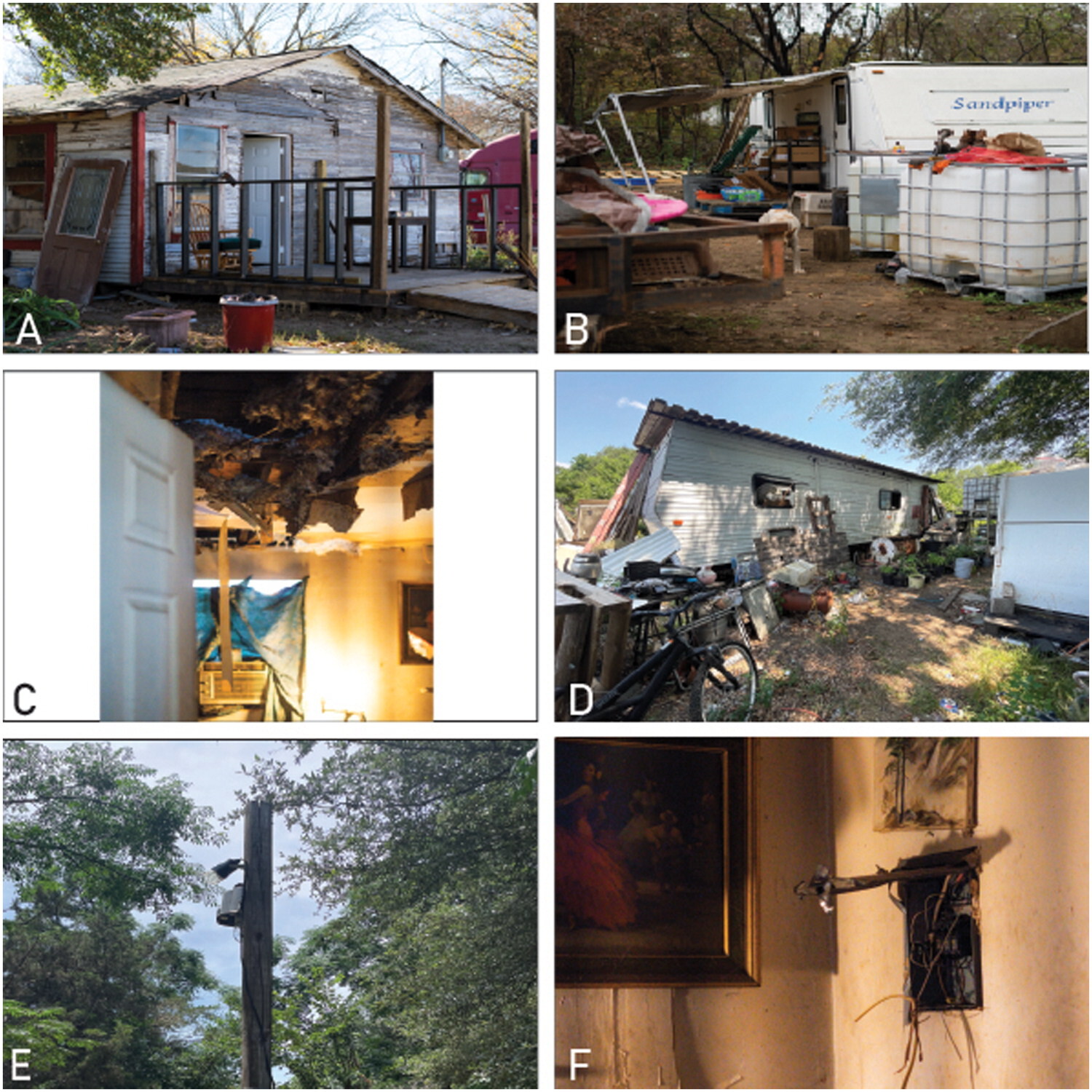
Figure 1: Photovoice images highlighting energy insecurity in Springville, Texas: (A, B) energy-insecure home and RV, (C, D) heating and cooling precarity, and (E, F) electrical precarity. (Credit Photovoice participants).
Making Energy Insecurity Visible
The study's surveys in Springville showed participants underreported deficiencies in their housing quality and may have normalized poor conditions. Others expressed a lack of urgency. Residents showed a high capacity to adapt and improve their energy security over time.
Residents developed a range of strategies to cope with extreme heat and cold, often relying on inefficient appliances or improvised solutions. Some used multiple window air conditioners to cool their homes, while others used scrap materials for shade or allowed vegetation to grow around their properties to reduce heat and retain moisture. One resident placed a water tank on top of her RV so the sun could heat the water.
The Evolution of Springville, Texas
In 1878, Springville, Texas, was founded. It was a Freedmen's Town that allowed residents to avoid the violence and persecution of Jim Crow laws in effect nearby. The first residents self-built their infrastructure, digging wells and septic systems. The community peaked at 460 residents in 1970.
In 2003, Dallas County deemed that the unincorporated community was located within a 100-year floodplain. The floodplain designation was used to enforce regulations that led to demolition of housing and displacement of residents. Subdivision regulations restrict construction of new structures and repairs and upgrades to homes. This fieldwork estimates around 125 residents currently live in Springville, around 55% of whom are African American.
Adaptations to Overcome Energy Costs
Gerardo, a newer resident who lived in an RV, said in his interview, "I mostly use simple electric fans. I have a window unit but rarely use it because it uses a lot of energy." Upon moving to the study area, residents often lacked access to electricity for months. They were forced to use diesel generators or resort to illegal connections.
The most disadvantaged residents limited energy use or spent a substantial portion of their income, likely more than 20%, on energy. Despite adaptations and normalization, the study made clear residents felt the burden of energy costs and uncomfortable temperatures.
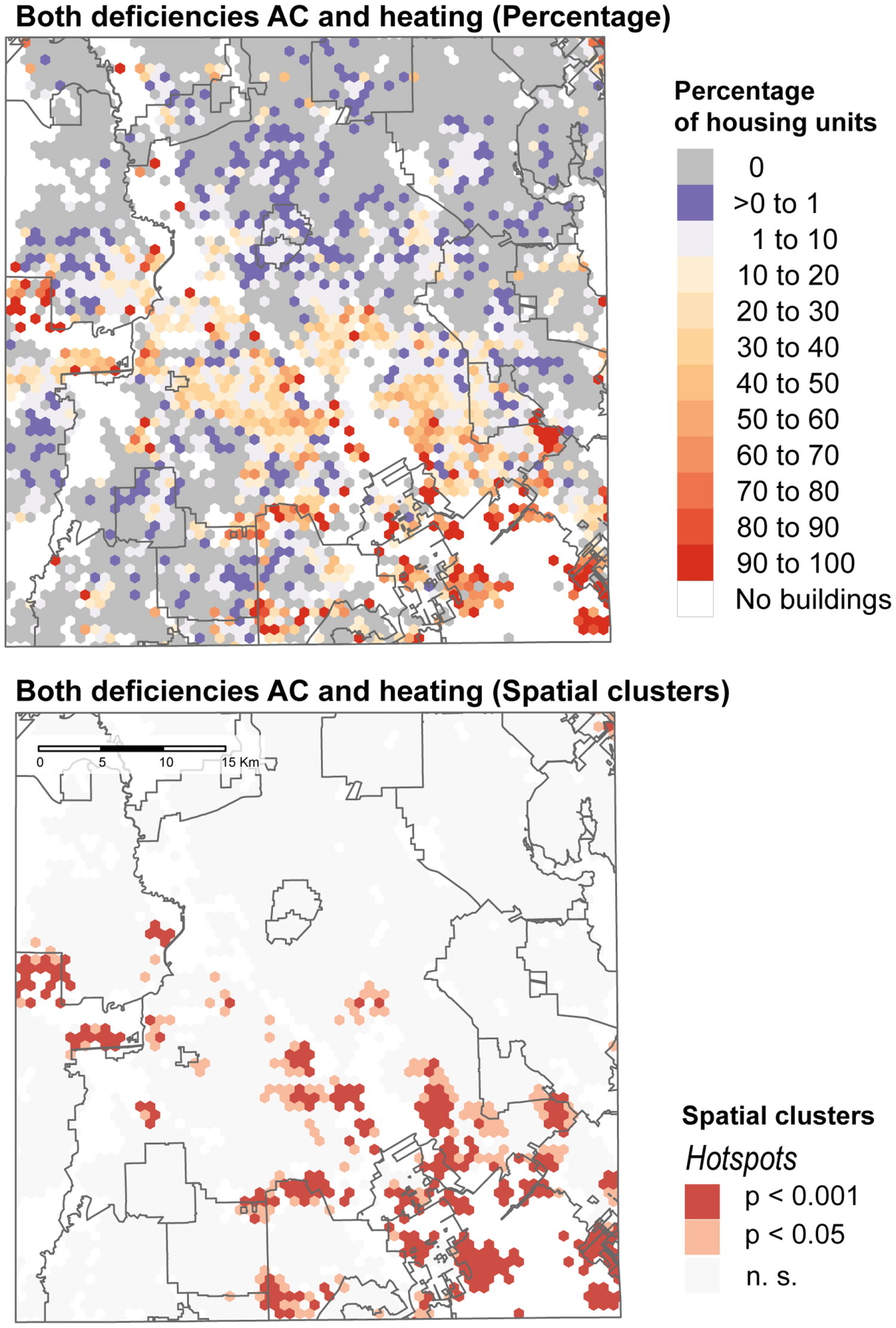
Figure 2: Index of physical energy insecurity in Dallas County. (Credit: Authors).
Collecting Better Data on Energy Insecurity to Craft Better Policies
National data on energy insecurity do not adequately document peri-urban communities, underestimating the number of households. The authors demonstrated a method for identifying hot spots of housing with heating or cooling deficiencies. They push for more data at the county level.
For example, most counties do not collect important data on surfacing materials, an important indicator of energy insecurity. While the depth of the authors' qualitative research is likely too time– and resource-intensive for county and city planners to replicate, the study provides a helpful survey questionnaire that yields more comprehensive data.
Programs like the Low-Income Home Energy Assistance Program and the Texas Comprehensive Energy Assistance Program help cover the cost of energy or housing upgrades. But the application is burdensome, requiring extensive documentation, proof of income, utility bills, and a verification of citizenship. These obstacles may hinder the engagement of some of the most vulnerable residents.
To address these challenges, the authors urge planners to advocate for increased funding, streamlining the application process, and developing outreach initiatives to connect underserved residents with available resources. Planners can use participatory approaches that ensure the engagement of all families in an energy-just transition.
Key Takeaways for Reducing Energy Insecurity
-
Outreach coupled with home energy upgrading technologies may effectively reduce energy consumption and improve residents' living conditions.
-
Policymakers should expand access to assistance for vulnerable households enduring chronic energy insecurity.
-
County governments should pay more attention to energy insecurity in peri-urban unincorporated areas.
-
Planners and policymakers should promote participatory home energy upgrades for low-value housing in declining neighborhoods.
Top image: Photo by iStock/Getty Images Plus/ GrafikLab