


Uncovering JAPA
Renewing the Promise of Manufactured Home Parks
summary
- Manufactured home parks (MHPs) can provide dense, affordable, and community-oriented neighborhoods, with more connected street networks and shared amenities than many nearby single-family neighborhoods.
- MHPs are often isolated from surrounding communities, with limited sidewalks, transit and access to parks and services, contributing to car dependence and environmental burdens.
- Planners can preserve existing MHPs, enable new parks in well-located areas, and retrofit communities to improve walkability, connectivity, mixed uses, and access to amenities.
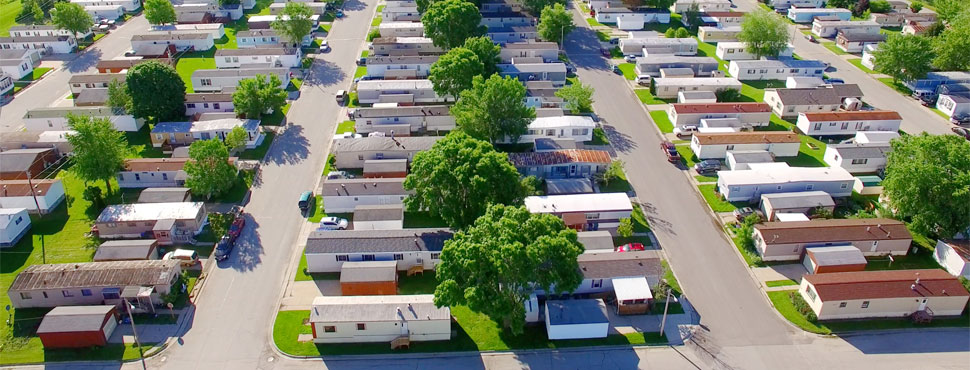
Manufactured home parks (MHPs), also called mobile home parks or trailer parks, do not fit the typical image of a desirable urban neighborhood. Rows of mobile homes along asphalt streets bear little obvious resemblance to the West Village neighborhood in Manhattan, grand avenues of Paris or Barcelona, or the celebrated Victorian neighborhoods of San Francisco. However, when compared to other typical development patterns nearby, MHPs excel on many fronts.
Their dense, interconnected neighborhoods with short blocks and shared amenities fit with crucial elements of Jane Jacobs' vision. Small front setbacks, narrow streets, and frequent intersections make streets more hospitable for a range of uses beyond driving. Children play in MHP streets and residents of all ages walk and interact. The visual environment of MHP streets is typically diverse and humane in scale.
More than 18 million people in the United States live in manufactured homes. That is more than public housing and federally subsidized rental housing combined. Despite their prominence, MHPs have been ignored and stigmatized in both professional planning discourse and broader public opinion.
In "Manufacturing Urban Form: Could Mobile Home Parks Be Good Urbanism?"(Journal of the American Planning Association, Vol. 92, No. 2), Zachary Lamb, Yael Nidam, Kelvin Yeoh, and Calvin Tang ask how manufactured home parks might embody characteristics of desirable urban form. They find mobile home parks can provide a form of affordable, flexible, and prosocial housing that is worthy of preservation and expansion.
Parks in the Bay Area
The authors looked at MHPs in California's San Francisco Bay Area. As of 2023, the nine counties of the Bay Area contain 431 state-licensed MHPs, which are home to an estimated 125,000 residents.
The authors chose the Bay Area for several reasons. It allowed this study to be in conversation with previous research analyzing the evolution of residential neighborhoods in the region, which overlooked MHPs. The study area is a metropolitan area, countering the common assumption of manufactured housing as solely rural. Further, the research team is based in the Bay Area, allowing for more in-depth field-based research. Lastly, the authors selected this study area because MHPs provide housing to low-to-moderate-income residents in a region facing an acute housing affordability crisis.
MHPs are most prevalent in areas that grew substantially during the middle decades of the 20th century. MHPs are less common in areas that urbanized before this period. Exemplifying this pattern, San José has more MHP lots than any other city in the state, with 10,827 lots in 59 registered MHPs.
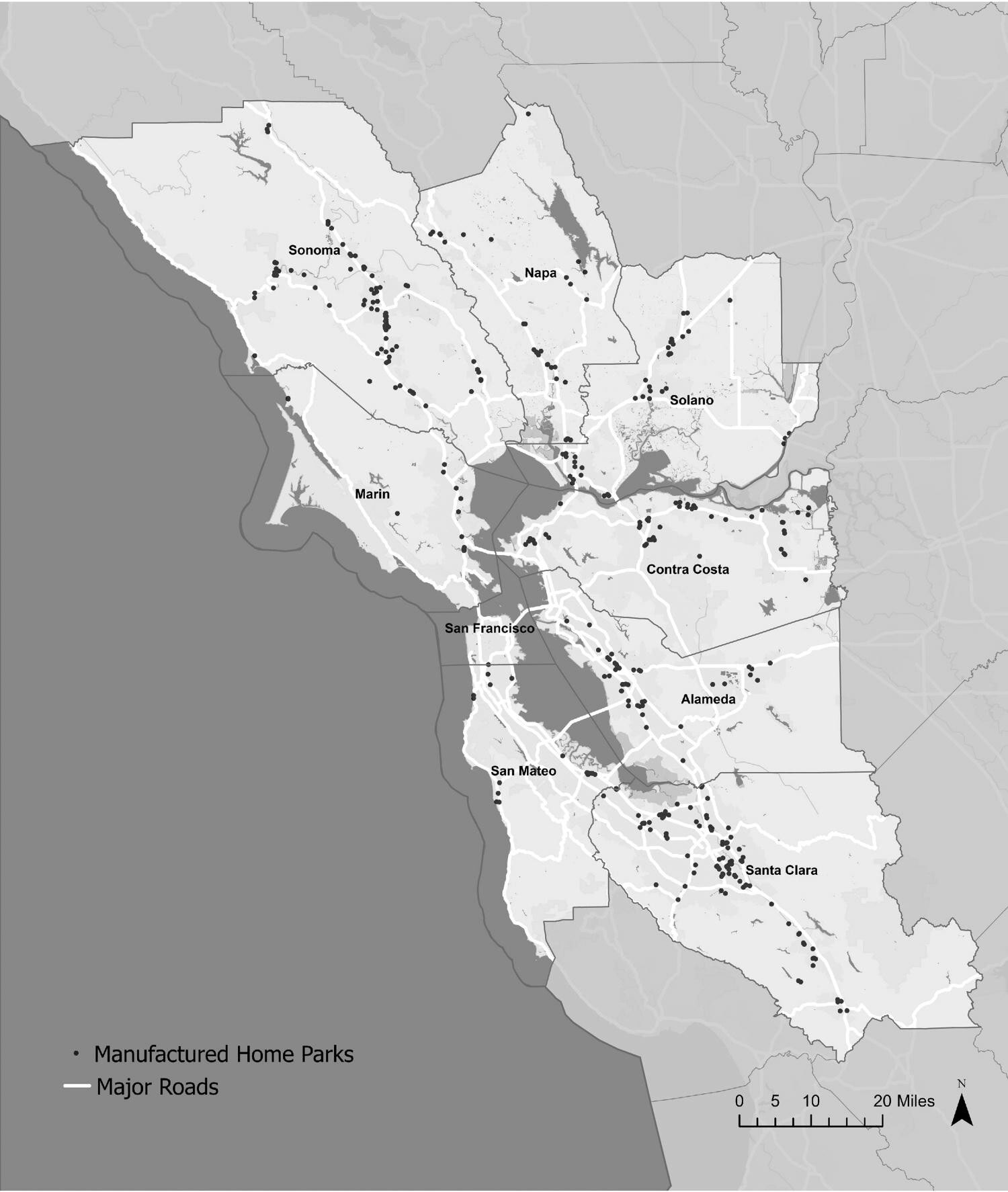
Figure 2: Location of Bay Area MHPs. (Credit: Authors, Lamis Chabbani).
The authors' regional analysis found that MHPs are found in places with many structural disadvantages. Only 28 percent of sampled MHPs were within a quarter mile of a park or public green space, whereas more than half were within a quarter mile of a limited access highway. However, many features affecting MHP residents' quality of life, from road widths and setbacks to boundary and entrance conditions, are not easily analyzed using GIS.
Beyond the Bird's-Eye View
In order to reveal patterns in overall MHP distribution as well as fine-grained spatial conditions, the authors conducted three layers of analysis, including:
- Analysis of the location of all registered MHPs in the region to assess access and exposure to selected amenities and harms.
- Observation of the immediate surroundings of a random sample of MHPs.
- Matched-pairs analysis of the internal morphology of sampled MHPs compared with adjacent site-built single-family residential neighborhoods.
Complementing satellite imagery, the authors relied on Google Street View, manual verification, and data from a commercial online MHP database.
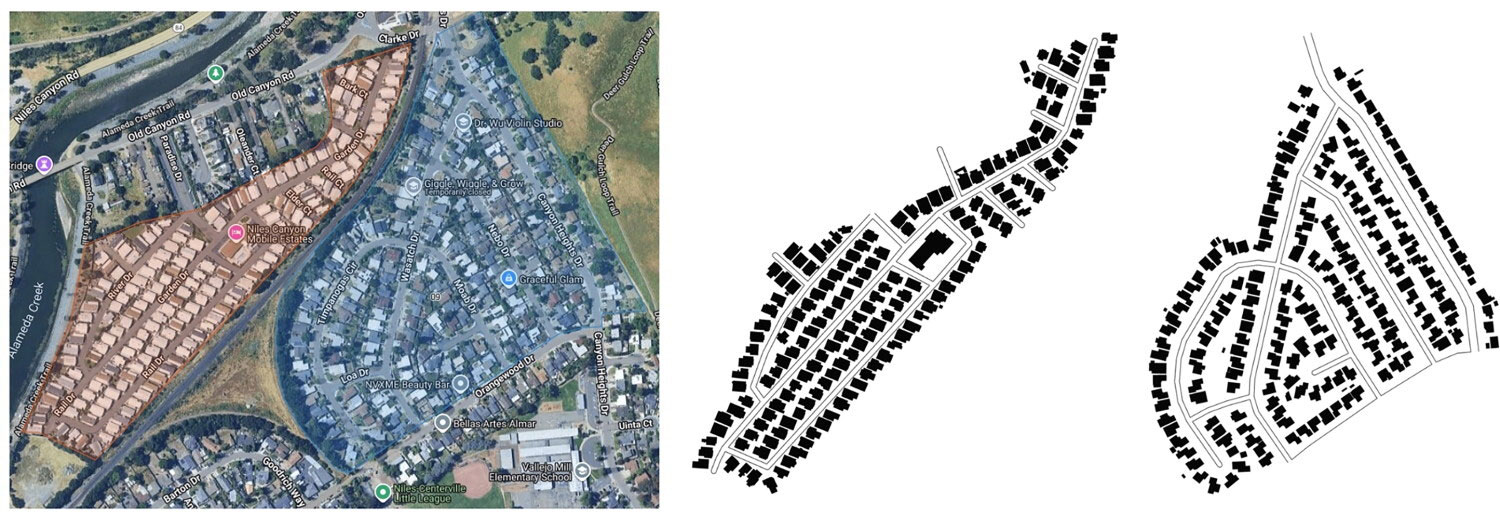
Figure 3: Matched-pairs analysis example: Aerial view and figure-ground drawing of a matched pair consisting of an MHP (left) and an adjacent site-built neighborhood (ASN, right). (Credit: Authors, Kelvin Yeoh).
GIS and remote sensing data struggle to capture many of the urban design elements affecting the human experience. To study everything from building materials to changing street networks, urban design researchers have developed methods known as typomorphological research. Typomorphological analysis can help illuminate how ordinary building types arise, flourish, and change. This understanding is needed for guiding changes to building types and the urban lanscapes in which they exist.
To date, there has been no substantial typomorphological research focused on manufactured home parks. This type of research can serve planners by identifying positive features in overlooked areas.
Parallels and Lollipops
The matched-pairs analysis showed similar median areas for MHPs and adjacent site-built neighborhoods. MHPs were substantially denser, with nearly 10 units per acre compared to 6 site-built units per acre. The median MHP had nearly three times the intersection density of the median site-built neighborhood.
The authors used an existing typology to classify street networks and neighborhood shapes. The most common street pattern among the sampled MHPs was the "fragmented parallel" type. With dense intersections and largely orthogonal streets, this type is associated with neighborhoods built in the 1950s. Adjacent site-built neighborhoods most commonly fit into the "loops and lollipops" pattern, a pattern that became common starting in the 1970s featuring long blocks and cul-de-sacs.
Overall, 79 percent of sampled MHPs were in relatively more walkable and connected patterns. Meanwhile, site-built neighborhoods were in less walkable and more fragmented "loops and lollipops" and "lollipops on a stick" patterns.
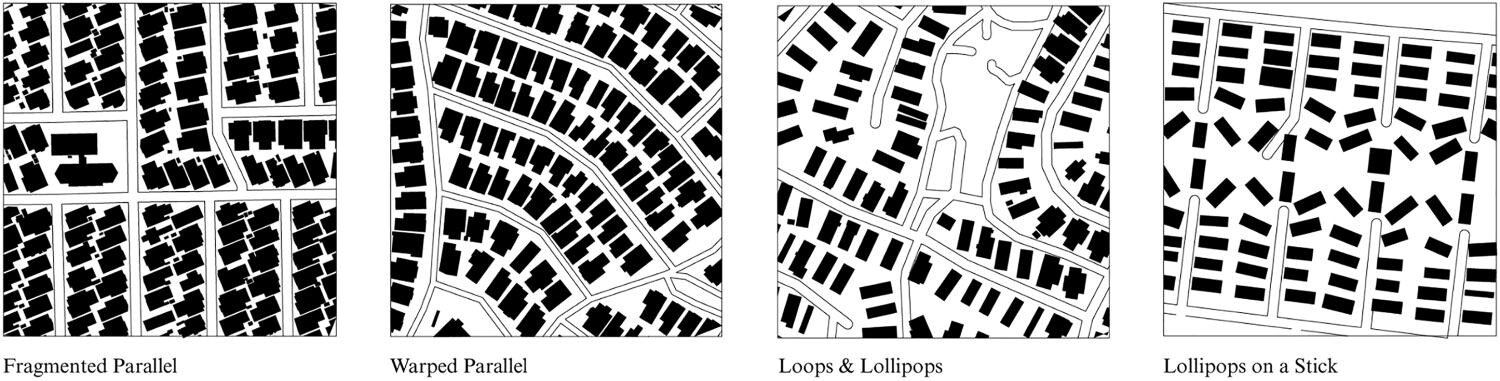
Figure 4: Typology of MHP street networks using Southworth and Owens's (Citation1993) classification. (Credit: Authors, Kelvin Yeoh).
Inward-Facing and Disconnected
MHPs were far more disconnected from surrounding streets with around one access road per 100 housing lots. Only 14 percent of MHPs had connections to external sidewalks on adjacent public roads, compared with 97 percent of adjacent site-built neighborhoods. Neighborhood perimeter fences and walls were common in both neighborhood types. Barriers were more common in the MHPs, where 97 percent had a wall or fence compared with 80 percent in sampled site-built neighborhoods.
The nature of manufactured housing affected many attributes, including the diagonal arrangement allowing for easier placement and removal of homes. This herringbone pattern was also favored because the staggering improves privacy by offsetting windows.
Compared to their adjacent neighborhoods, sampled MHPs were roughly twice as likely to have a shared green space or park (41 percent versus 21 percent), eight times as likely to have a shared swimming pool (83 percent versus 10 percent), and more than 12 times as likely to have a shared clubhouse or community building (86 percent versus 7 percent). This analysis excluded small neighborhoods and parks, which are far less likely to have shared amenities.
MHPs' relatively poor bike, walk, and transit scores are aligned with other findings. The location of MHPs increases car dependence and heightens pollution burdens. MHPs have more barriers and far fewer sidewalk connections than adjacent site-built neighborhoods. Land use and zoning regulations and MHP design practices likely contribute to the spatial separation of MHPs from their surroundings. Nonresidential uses are rare in these settings, making it difficult to satisfy most daily needs without a car.
Planners and designers can mitigate burdens and improve MHP residents' lives. Increasing the number of access points where MHPs connect with surrounding streets can improve connectivity. Integrating more nonresidential land uses can create livelihood opportunities and amenities for residents within walking distance. This could also encourage social connections between residents of MHPs and residents of surrounding areas. Input from residents, MHP managers, and other stakeholders would be essential to such efforts.
Key Takeaways
-
Jurisdictions should expand efforts to preserve affordable housing in existing MHPs using tools such as mobile home park zoning, lot rent stabilization, and restrictions on owners' ability to close or convert MHPs to other uses.
-
State legislatures and local governments could reform land use regulations to enable the development of new MHPs in well-located, environmentally safe areas.
-
Designers and planners could develop strategies to retrofit existing MHPs to improve walkability and connectivity with surrounding neighborhoods.
-
Planners and designers could develop tools to diversify the building types and land uses in existing and new MHPs.
Top image: Photo by iStock/Getty Images Plus/ JamesBrey