


Uncovering JAPA
The Power of 'Streateries' in Activating Public Spaces
summary
- "Streateries," or temporary outdoor dining structures, transformed urban streets during the pandemic by creating opportunities for social interaction and public activities.
- A study in Seattle's University District found that pedestrians were 2.1 times more likely to stay near restaurants with streateries, and 38.5% of people in blocks with streateries were talking with others, compared to 16.7% on streets without them.
- The findings highlight how adapting street rights-of-way can strengthen urban resilience by creating more opportunities for social interaction and public life.
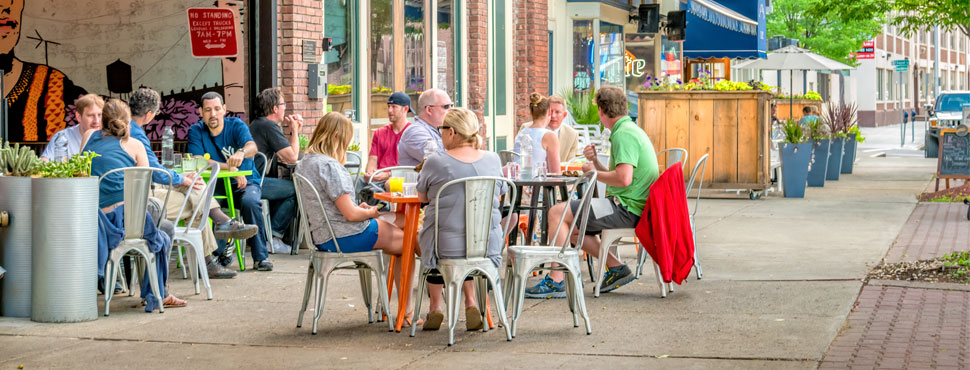
Temporary outdoor dining structures, known as street eateries, or "streateries," are emblematic of a growing debate over the role of urban streets in society. Prior to the pandemic, city streets were geared toward fixed designs favoring automobiles over pedestrian traffic — movement over stationary activities. Pandemic restrictions on indoor dining, however, changed all of that. Across the country, ad hoc policies were created to permit businesses to temporarily build dining areas in the right-of-way (ROW). At these new streetside spots, screen-gaze strolling and window shopping gave way to new public behaviors.
In "How Right-of-Way Adaptations Support Urban Resilience: Pandemic Streateries and Social Interactions in Seattle's University District" (Journal of the American Planning Association Vol. 92, No. 2) authors Daniel Benjamin Abramson, Brian Kirk, Katherine Idziorek, Branden Born, and Rachel Berney study public life and chance encounters around streateries on The Ave.
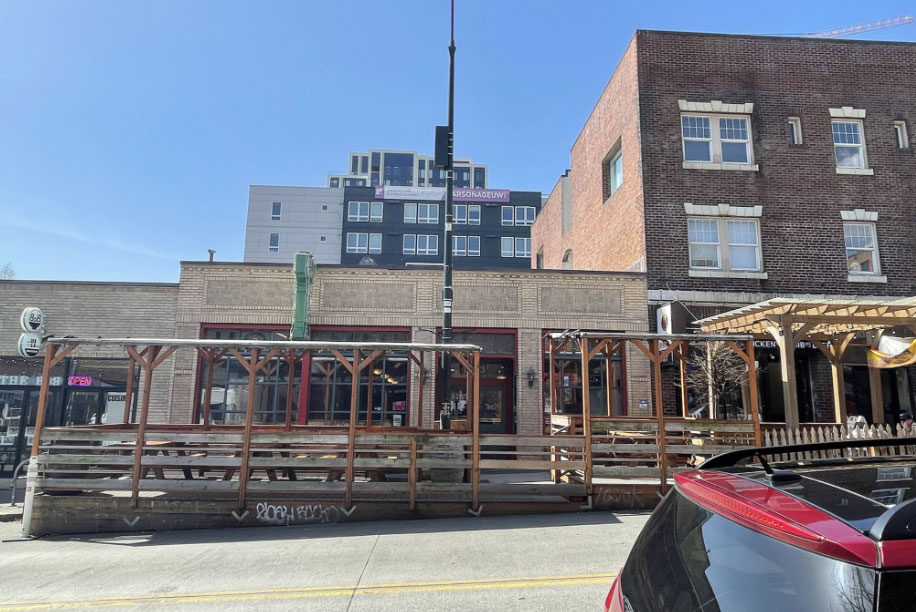
Image 1: An example of a covered streatery in Seattle’s University District. (Credit: Brian Kirk, spring 2023.)
Staying Put Increases Chance Encounters
To understand social interactions in a public space, the researchers set out to assess the value and impacts of streateries, ROW interventions, and overall public space vibrancy.
The study shows that the longer people stayed in place in and around the streatery, the more likely they were to have a chance encounter with another person. Weather and time of day influenced the number of chance encounters. During observation periods of 45 to 60 minutes, restaurants with streateries had an average of 0.53 chance encounters per 100 people. People who had chance encounters were typically seated and looking around or were moving past and actively observing people sitting in the streatery. On average, a total of 301 people entered, used, or passed by the space in front of streatery restaurants in that study window. Even when people used electronic devices, they would still engage in other activities while occasionally glancing back to their devices.
In comparison, slightly more people visited restaurants without streateries in the same period, yet no chance encounters were observed. In front of restaurants without streateries, most people walking by were on their phones, walking with a group, or, if they did look around, were typically looking into windows or at menus.
Research Approach to Understanding Streatery Impacts
To capture a variety of social interactions occurring across restaurant business hours, student researchers visited each space on The Ave three times per weekday for 45 to 60 minutes per observation session at two windows of time: lunch and dinner. Researchers also visited on a Saturday during the weekly farmers market. Observations were split into two subcategories: staying and moving data. The staying subcategory included dining, talking, waiting and buying. Complementing this categorical data, students also described social interactions, including their interaction with elements of the streatery and the surrounding built environment.
Additionally, the researchers considered the following questions:
-
How do streateries affect the intensity and diversity of social interactions? Do streateries create opportunistic encounters, and to what extent?
-
What kinds of streateries/contexts produce the greatest number of social interactions?
-
What kinds of streateries/contexts produce the most diverse set of activities?
This study was conducted in collaboration with the Seattle Department of Transportation's (SDOT) Public Space Management Team. The authors adapted the methodology of Seattle's Public Life Study program to obtain more nuanced observations of social interactions in public space, including spontaneous, opportunistic and chance encounters as aspects of public life. As a result of this study, Seattle's Public Life observation protocol now includes chance encounter as a new metric for all staying data collection.
Long-term Adaptation for Street Rights-of-Way
The findings point toward the power of streateries in activating public spaces. Pedestrians were 2.1 times more likely to stay in a space, either in the street or going inside to dine if there was a streatery present. Further, 38.5% of all people in blocks with streateries were talking with others compared with 16.7% of people in streets without streateries. The streateries and their blocks appeared to facilitate conversations because more people were talking and people-watching
The study points toward the possibility of broader adaptation in street ROWs, which make up 26%of Seattle's total urban land area. After pandemic restrictions lifted, many outdoor dining spaces and other adaptive uses persisted and evolved into more permanent structures. Since this study, seven additional streateries were built on The Ave, and all streateries observed in the study continue to operate as of this writing.
Key Planning Practice Takeaways for Streateries
-
Integrate disaster-responsive adaptations with improvements in everyday public spaces.
-
Assess emergent ROW interventions with more nuanced measures of social interaction, including diversity, intensity and chance occurrences.
-
Future studies should explore possible resolutions for the complex sets of tradeoffs around ROW adaptations.
Top image: iStock/Getty Images Plus/ benedek