
Aug. 6, 2026
Ports across the country are facing growing pressure to reduce emissions while maintaining the economic activity that supports jobs and regional economies. For planners and decision-makers, this can create a difficult challenge: How do you improve air quality and public health without compromising the industries that communities rely on?
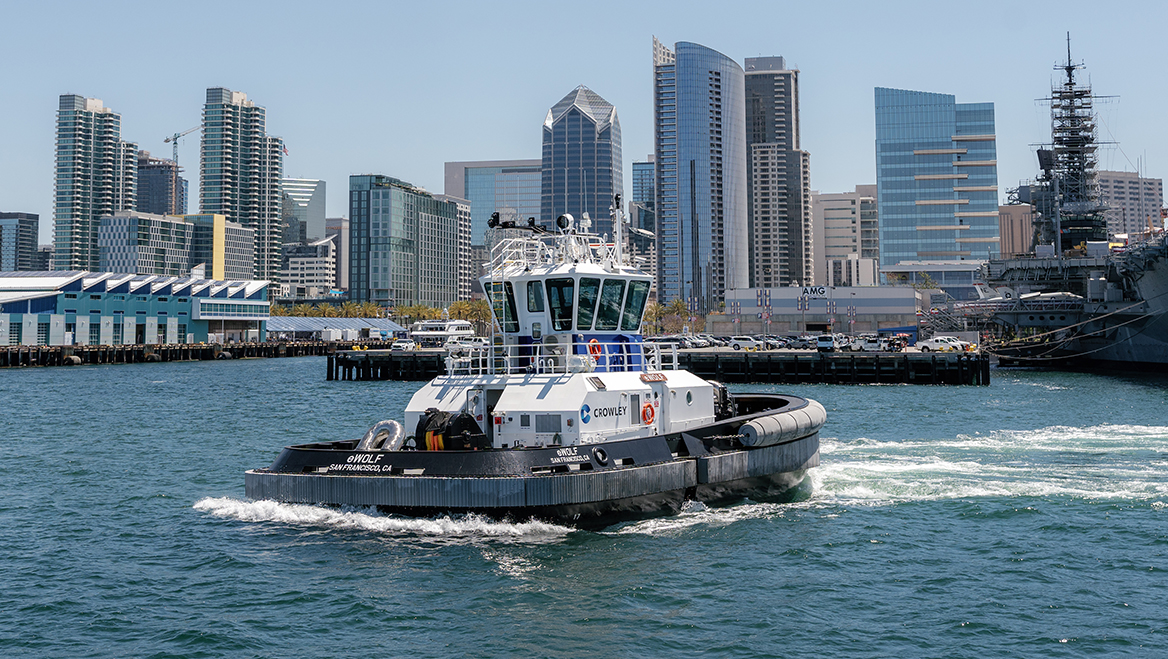
At the Port of San Diego in Southern California, implementation of the Maritime Clean Air Strategy (MCAS) contributed to a nearly 50-percent reduction in diesel particulate matter from port operations since 2019. Along the way, we’ve learned that success depends as much on planning, partnerships, and long-term strategy as it does on technology.
Those lessons may prove useful not only for other communities navigating similar transitions but also for public agencies managing large-scale change — especially as it relates to integrating new technology for broad adoption, such as artificial intelligence (AI) or driverless vehicles.
MCAS is just one of a host of planning efforts at the Port, which is responsible for 34 miles of waterfront comprising thousands of acres of land and water. The Port Master Plan Update, a comprehensive planning effort that began in 2013 to guide development for the next generation, is expected to be considered by the California Coastal Commission for adoption later this year. The Port has land use authority for this area in the public trust, while considering input from surrounding city, county, and indigenous governments and special districts that govern transportation and land use.
Simple Strategies Can Lead to Strong Solutions
As ports and communities work toward cleaner transportation and industrial systems, specific technologies and infrastructure needs will continue to evolve. While every situation is different, the Port of San Diego found three approaches that have proven particularly valuable in working toward creating a cleaner working waterfront.
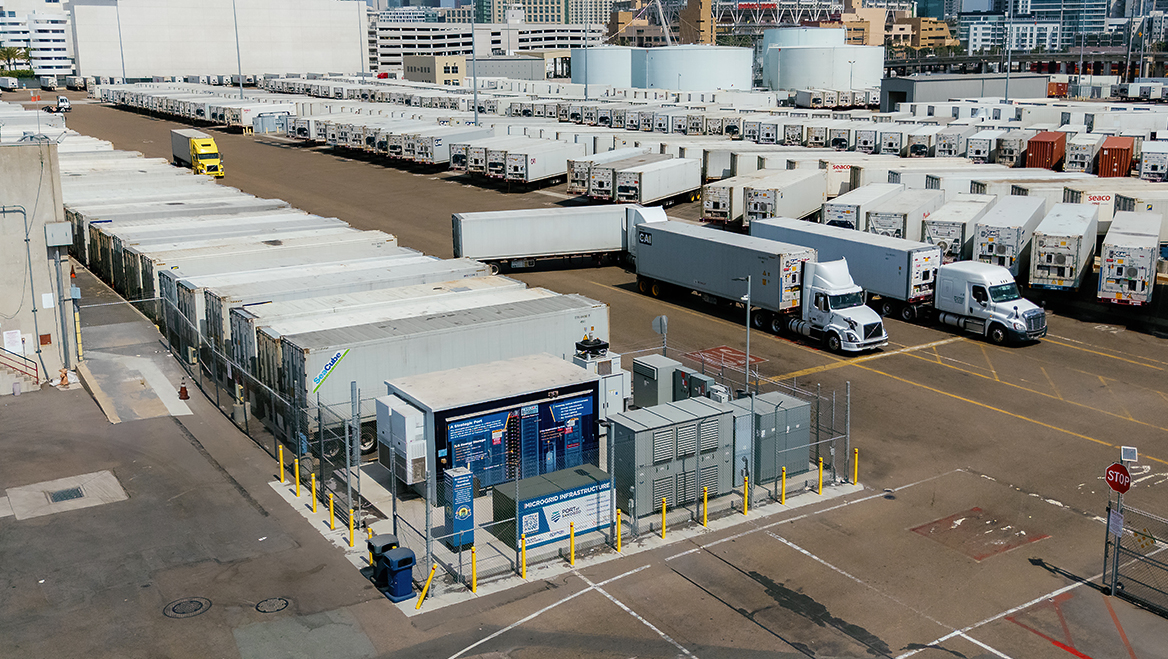
More than $86 million from various grants and partnership contributions supports clean air projects like this microgrid that reduces greenhouse gas emissions and provides backup power at the Port’s Tenth Avenue Marine Terminal.
1. THINK BIG BEFORE YOU APPLY FOR GRANTS
If there is one lesson that stands out, it is this: The strategy must come first. Funding opportunities follow. Too often, agencies begin with the question, “What grants are available?” That approach can lead to disconnected projects that solve individual problems but fail to advance a broader vision.
Instead, the Port developed a comprehensive MCAS that established long-term zero-emission goals in multiple areas, including shore power, cargo-handling equipment, truck electrification, harbor craft, and supporting electrical infrastructure. Because that framework was already in place, we were able to pursue funding opportunities as they emerged, rather than redesigning projects to fit individual grant requirements.
That approach has paid significant dividends, with the Port receiving a $58.6 million grant through the Environmental Protection Agency’s Clean Ports Program in 2024. We had already identified priority projects and infrastructure needs, so we could combine that funding with contributions from our tenants and partners, the California Energy Commission, the San Diego County Air Pollution Control District, and Port resources to support more than $86 million in clean air initiatives. The project includes electrical distribution upgrades, shore power expansion, cargo equipment electrification, truck charging infrastructure, a zero-emission truck hub, workforce development, and community outreach.
The same approach — assembling funds from multiple programs and partners — helped advance California’s first shore power system for cargo ships that transport cars and other vehicles.
Collaboration has also been critical throughout implementation. Port staffers meet regularly with the local electric utility to coordinate grid capacity, electrification planning, and future energy needs, and also routinely share lessons with other ports through discussions facilitated by the California Energy Commission. Comprehensive planning and a strong strategic framework allow agencies to pursue multiple funding opportunities and take advantage of emerging technologies while navigating changing regulations.
That flexibility is becoming increasingly important, because rising construction costs, supply chain disruptions, “Buy American” requirements for federal grants, and competition for specialized equipment pose challenges to implementation. Some electrical equipment can take years to procure. While long-range planning cannot eliminate those challenges, it can help agencies navigate them more effectively.
Planning takeaway: Develop the strategy before pursuing the funding. A strong framework creates opportunities to combine grants, partnerships, and local investments as they become available — while staying flexible in these challenging economic times.
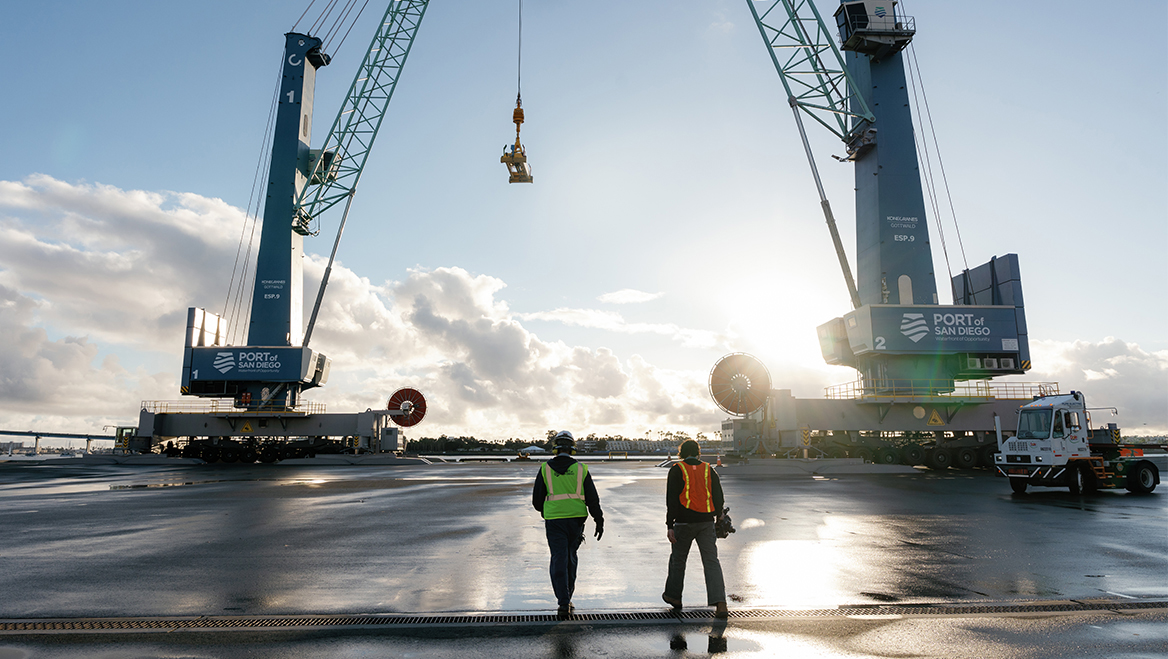
All-electric mobile harbor cranes address environmental concerns while creating economic value, delivering shared benefits for multiple stakeholders.
2. BE A ‘BIG TENT’ BY LOOKING FOR SHARED WINS
Environmental initiatives are often framed as a conflict between economic activity and community health. Early on, though, we challenged ourselves to find solutions that could simultaneously benefit industry, communities, and environmental goals.
That mindset influenced both the projects we pursued and the partnerships we built. The Port established a memorandum of understanding with a regulator — the San Diego County Air Pollution Control District — that emphasizes collaboration and problem-solving over a rigid working framework.
Rather than viewing environmental compliance and economic development as competing priorities, we sought opportunities to advance both. One example is the Port's investment in all-electric mobile harbor cranes at its Tenth Avenue Marine Terminal, which eliminate emissions, reduce noise levels, improve precision, and have the highest lift capacity on the West Coast.
Planning takeaway: Look for solutions that improve environmental performance while creating operational or economic value. Projects that deliver benefits among multiple stakeholder groups are often easier to advance and sustain over time.
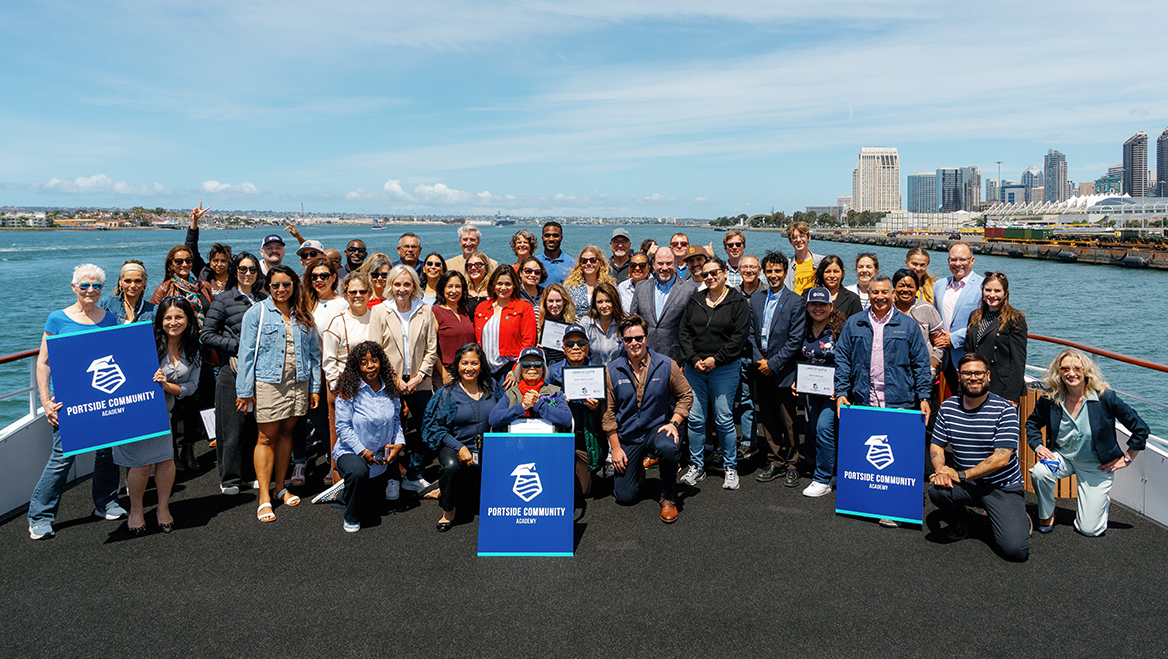
The Portside Community Academy’s five-session curriculum teaches participants about clean air and electrification projects, impacts on human health and quality of life, and technological advancements in the maritime industry.
3. DON’T GHOST YOUR SUPPORTERS ONCE THE PLAN IS APPROVED
Many public agencies invest heavily in outreach during plan development, but scale back engagement once a plan is adopted. However, implementation requires ongoing education and collaboration.
The Port continues to participate in a state-established Portside Community Steering Committee, a community-led coalition focused on improving air quality, especially in historically disadvantaged and lower-income urban neighborhoods nearby. The committee was instrumental in developing the strategy, and its members continue to review implementation progress and other priorities.
For community members who want a deeper understanding of how port operations, technology, and clean air initiatives work, we created the Portside Community Academy, a structured educational program that provides a detailed look at the strategy and lifts the curtain on operations. With nearly 300 graduates over the past three years, the academy has created passionate ambassadors who share information with their communities.
Participants gain a deeper understanding of how decisions are made, technologies are deployed, and air quality improvements are measured. Just as importantly, port staff gain valuable insights into community concerns and priorities.
Planning takeaway: Complex infrastructure projects often take years to deliver, and maintaining public trust throughout that time requires continued and regular communication, education, and transparency. Don’t let engagement end when the plan is adopted. Structured education programs are one example of how to engage key communities as informed partners in implementation.
RECOMMENDED ARTICLES