
Uncovering JAPA
Rethinking Staff Reports: Lessons from Fashion and Art
JAPA turns research into action. All APA members have access to JAPA and its full archive.
summary
- Experimenting with avant-garde staff reports sparked discussion and reflection, helping commissioners and planning staff rethink how planning information is communicated and understood.
- The study found that group reflective practice improved communication between planners and commissioners, revealing knowledge gaps, strengthening collaboration, and fostering greater appreciation for planning staff's work.
- Findings show that regularly incorporating group reflection into commissioner training can strengthen decision-making and foster more collaborative and informed planning practice.
Essential, but often uninspiring, planning staff reports have room for improvement. Australian planning scholar Leonie Sandercock argues for planning reports that move beyond cliché and recycled material. She takes the documents and their authors to task: "Life's juices have been squeezed from [these reports]… They serve to perpetuate a myth of the objectivity and technical expertise of planners."
In "Group Reflective Practice for Planning Commissioners" (Journal of the American Planning Association, Vol. 92, No. 1), Bonnie J. Johnson, FAICP, injects avant-garde artistry into staff reports. Testing how planning commissioners respond to the intervention, Johnson found unexpected value in the ensuing group reflection about both creative and traditional staff reports.
What Goes into a Staff Report?
Staff reports help inform decisions made by planning commissions and local governing bodies. Local government planners mainly write these reports in response to site-specific items, such as permit reviews and subdivision plats, as well as broader questions, such as comprehensive plan amendments.
They record key information and synthesize staff expertise from myriad officials, from engineers to police to economic development staff. Staff reports must be legible to many audiences, from residents to judges, and hold their attention while communicating complex ideas from a variety of fields. This is not an easy task, yet staff reports must be produced monthly by busy planning departments.
During the research process, one commissioner shared that his favorite part of staff reports was "not having to write them." Another commissioner pointed out that "there's a kernel of a decision there, and it's not always apparent."
Commissioners' suggestions for staff reports:
-
Logically present cases allowing for rational decisions.
-
Format with easy-to-find staff recommendations, issues, and suggested motions.
-
Use visuals such as drawings, aerial photos, elevations, maps, etc.
-
Written format over alternative modes.
-
Navigation aids are important: cover pages, tables of contents, hyperlinks.
Dressing Reports for the Runway
The glow-up began by mapping out existing staff reports as if they were outfits. Johnson placed staff reports on axes of fashion thinking: from elite to street and from past to future. The 'past' and 'street' categories, for example, include vintage clothing, grunge, and thrift store classics. Traditional, rational staff reports were placed squarely into the 'elite' and 'past' quadrant. Staff reports that simply copied applications with no staff additions landed in the 'past' and 'street' quadrant.
Avant-garde staff reports were created by Johnson and Savannah Wakefield, then an undergraduate research assistant. One report took the form of a hanging mobile. This moving yet balanced artistic form brings to life the AICP Code of Ethics and Professional Conduct, illustrating how planners are called to "make ethical judgments in the public interest, balancing the many competing agendas…"
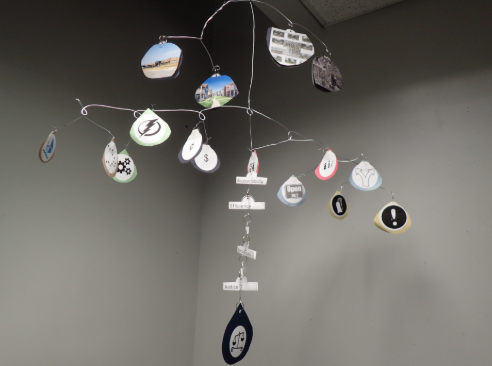
Figure 1: A staff report made into a mobile, created by the author and Savannah Wakefield. (Credit: Author)
Another staff report took the form of a collage, showing the layers of information and asking cartoonish questions that challenge the viewer. From a wry newsletter to a board game, the avant-garde reports surprised and sparked conversation.
Avant-garde fashion is over-the-top and impractical, yet catalyzes discussion and creative thinking. Through its emotional charge, extraordinary outfits can inspire everyday, "regular" clothing. Johnson uses fashion thinking to break staff reports free from their usual frameworks. Fashion looks to the past for inspiration, examines today's habits, and anticipates the future. Planners must consider long-range plans when making short-term decisions.
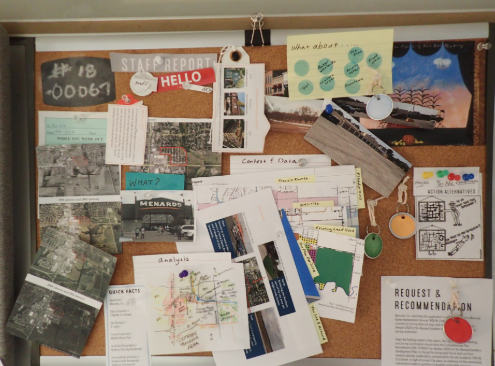
Figure 2: A staff report made into a collage, created by the author and Savannah Wakefield. (Credit: Author)
Reflection Beyond the Focus Group
In 2018 and 2019, Johnson recruited planners and their planning commissions based on participant interest. Six planning commissions, two governing bodies, and their planning staff participated in this study. Participants represented a variety of local and regional governments: Glynn County, Georgia; San Francisco Bay Area; Liberty, Missouri; Calistoga, California; Hutchinson, Kansas; Topeka, Kansas; Lindon, Utah; and Stayton, Oregon.
After reviewing the avant-garde staff reports, Johnson gathered baseline reactions and new ideas about staff reports. The author used a temperature-taking technique borrowed from "Say It Straight" training that is used in schools and substance abuse programs to encourage straightforward communication.
Unintentionally, this technique allowed her to shift from a focus group research project centered solely on staff reports to productive group reflection, revealing how commissioners and planners interpret the same information differently and highlighting the uneven terrain of planning knowledge.
More commissioners's suggestions for staff reports:
-
Hold readers' attention and not be "obscuring."
-
Educate the public ahead of time.
-
Help commissioners understand the background logic and path to the report.
-
Explain the different sides of the argument, historical context, feasibility, and options.
-
More is not always better — avoid repetition.
-
Offer starting points and guides for discussion to prevent going down a rabbit hole.
-
Make clear if there are precedents and if this will set a precedent.
Commissioners's review of avant-garde staff reports yielded surprising results about the value of group reflection. Participants offered suggestions for improving staff reports, but there were more meaningful findings. Beyond innovating staff reports, it became clear how communication between staff and commissioners can lead to meaningful exchanges and collaboration. One commissioner suggested renaming "staff reports" as "staff discovery."
The conversation made clear some of the legislative requirements that guided the process while illuminating opportunities for shifting from default patterns. One commission wondered if they could host two public hearings, the first to get initial ideas from the community before moving to decision making. Commissioners asked if public notices could be written in a friendlier manner. Beyond suggestions, commissioners affirmed the existing quality of reports and the work of planning staff.
The group reflection revealed things about the process that staff thought the commissioners knew, but did not, and uncovered what commissioners thought their staff did well, again, that staff did not know. One commissioner was able to express their appreciation for staff with, "They are the ones who do the legwork."
Top image: Photo by iStock/Getty Images Plus/ MTStock Studio
ABOUT THE AUTHOR