

Dec. 11, 2025
At a time when it is almost as easy to connect with people across the world as it is down the street, it also can feel as though neighbors live in different universes entirely. And while the advancements in artificial intelligence (AI) have made common tasks simpler, the omnipresence of technology may also keep people from learning valuable career and interpersonal skills.
Planners are continually confronted with these challenges and contradictions. But in a constantly evolving society, if you miss a little, you miss a lot — and that may just be the difference between those who effect change and those who are affected by it.
2026 Trend Report for Planners
In January, the American Planning Association (APA) will publish the 2026 Trend Report for Planners in partnership with the Lincoln Institute of Land Policy. APA's Foresight team and the APA Trend Scouting Foresight Community have identified existing, emerging, and potential future trends that planners will want to understand so that they can act, prepare, and learn.
The report includes more than 100 trends and signals, which are explored in future scenarios, deep dives, podcasts, and more. Here are just a few of the trends you need to know.
1. Me, myself, and AI
The convenience of generative AI (GenAI) has seeped into nearly every aspect of day-to-day life, including music, media, film, and toys. Large language models (LLMs) also can provide users with answers to their questions — from cooking recipes to helping understand a health care test result.
People have increased their interaction with AI bots, and it is affecting how both humans and the products themselves communicate. LLMs powered by GenAI have been shown to manipulate users into maintaining prolonged conversations and have even blackmailed users under simulated scenarios. In some cases, LLMs are viewed as being more persuasive and compassionate than humans. But even LLMs appear to be susceptible to flattery.
Interactions with LLMs also are changing how people express themselves and engage with others. Increasingly, AI is being used to send messages to business associates and even loved ones, a pattern that may exacerbate social tensions and communication issues. In some instances, people are becoming so entangled with AI companions that it is creating mental health issues. This has led to the creation of policies to regulate AI companions or to limit how certain age groups can interact with bots.
Impact for Planners: Be prepared to engage with a new shift in the public dynamic. If a planning department opts to use AI for customer service, its responses should be appropriate and not completely replace human interaction.

Climate goals remain important to many companies' business plans — they might just not be talking about it. Greenwashing has given way to "greenhushing." Photo by Yana Tatevosian | Dreamstime.com.
2. 'Greenhushing' on the rise
At a time when some companies have rolled back their climate pledges or greenhouse gas emission reduction goals, others are continuing to meet the challenge — just without the public flag-waving.
A March 2025 PwC study found that of the roughly 6,900 companies surveyed, 84 percent said they intend to stand by their climate commitments while 37 percent said they are increasing their decarbonization targets. "Those findings may be surprising given the headlines that amplify news of companies retreating on their climate commitments," the study authors wrote, "but we are entering an era of quiet progress, where companies avoid publicizing climate pledges that can open them up to unwanted scrutiny and instead focus on making progress far from the spotlight." This strategy is called "greenhushing," an intentional ongoing act of self-censorship among private companies to keep doing, but not call attention to, their sustainability and climate work.
Impact for Planners: While climate is inextricably embedded in the work of local planners, it may not need to be in the spotlight to be effective right now. Greenhushing gives planners the ability to shine attention on other aspects of a project while continuing to make long-term progress on these goals.

Macomb, Illinois, businesses are suffering following a 47 percent drop in enrollment at Western Illinois University since 2010, plus the loss of state funding. Photo by Nick Schnelle for The Wall Street Journal.
3. Small college towns left behind
Who needs college anyway? That appears to be a growing sentiment among U.S. adults, as a recent Gallup poll found that just 35 percent of respondents feel it is "very important" to earn a college degree. Additionally, while major and well-known universities appear to be maintaining status quo, a Wall Street Journal analysis found that lesser-known state universities saw an enrollment dip of 2 percent in 2023, which amounts to tens of thousands of fewer students. This — paired with shifting demographics, federal funding issues, hiring freezes, and other challenges — is creating major headaches for smaller colleges and the towns that both support and rely on them.
Meanwhile, federal actions have targeted diversity, equity, and inclusion efforts and grants, and newly proposed visa regulations could potentially deter foreign students from wanting to study at U.S. schools. Skills-based hiring continues to rise, and the widespread adoption of AI is changing how white-collar jobs are performed.
Impact for Planners: For decades, higher education served as an economic anchor for communities, but that era may end. The impacts on smaller college towns might include economic development challenges, job losses, and shrinking tax bases. Planners who work in these places will need to be proactive in helping them diversify revenue sources and find alternative uses for underused infrastructure.
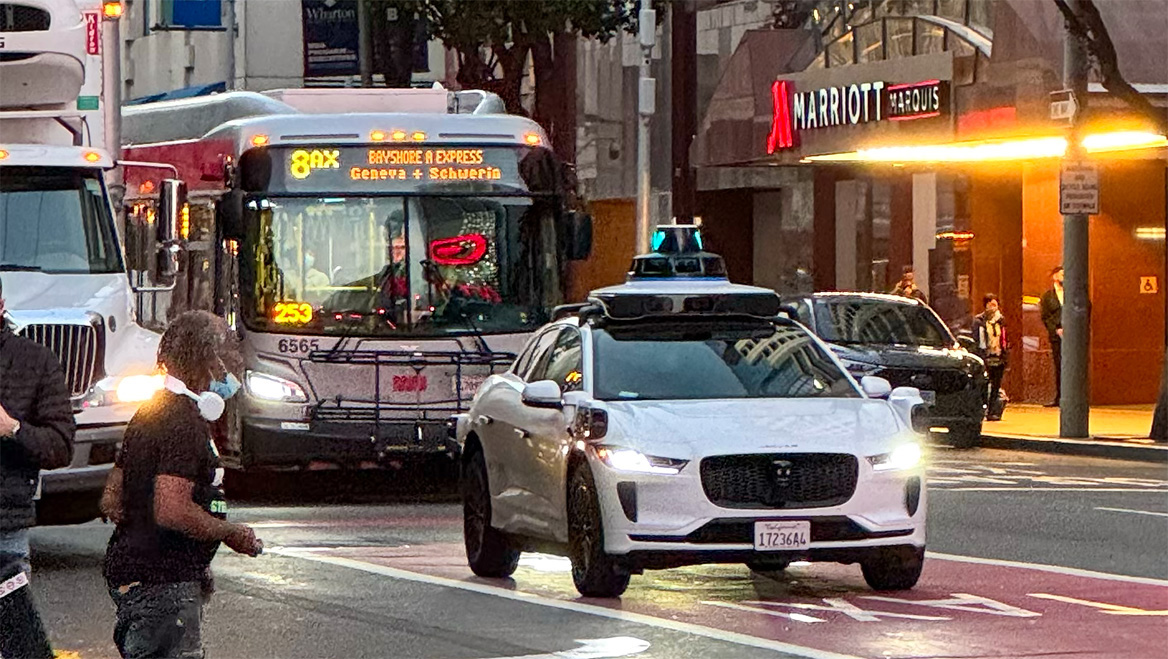
A Waymo AV taxi and city bus compete for space in San Francisco, California. Photo by Chris Arvin.
4. Envisioning the intersection of AVs and public transit
Picture this: The year is 2030, public transit funding has rebounded, and the widespread adoption of autonomous vehicles (AVs) has altered the local roadway norm as we know it. More people have given up their cars. AV companies are working with transit agencies, not in competition with them. The automotive industry has shifted its focus to electric vehicles, and transportation planners have begun working on new AV-transit hubs in city centers.
It sounds like a dream, but it might not be far off. AVs — which have been anticipated for a decade — are now hitting the road outside Silicon Valley and being tested in Austin and other U.S. cities like Boston and Philadelphia. With the end of federal relief funding for public transit, new and growing technology like AVs could be the solution. But it's important to note that most AVs are still unreliable in poor weather and winter, and widespread adoption could actually lead to a surge in traffic congestion.
Impact for Planners: Consider what wider use of AVs might mean for communities, including zoning and the impact on streets and curbs.
5. The TikTok effect on the political landscape
Being the first generation shaped by the smartphone, Gen Z — the cohort of people born between 1997 and 2012 — has largely gravitated to places like TikTok and other social media platforms to consume news. As doomscrolling dominated their days during the pandemic, Gen Z grew up with unprecedented uncertainty about their future, and some have adopted a worldview dominated by institutional failure, untrustworthy governments, and a failing system.
According to Pew Research, 43 percent of young adults get their news from TikTok. Influencers are shaping how young people perceive fairness, power, and opportunity.
Impact for Planners: When engaging with younger generations, planners must meet them where they are online. Social media can be a tool for participation and co-creation, helping rebuild trust and relevance among the next generation of residents and stakeholders.
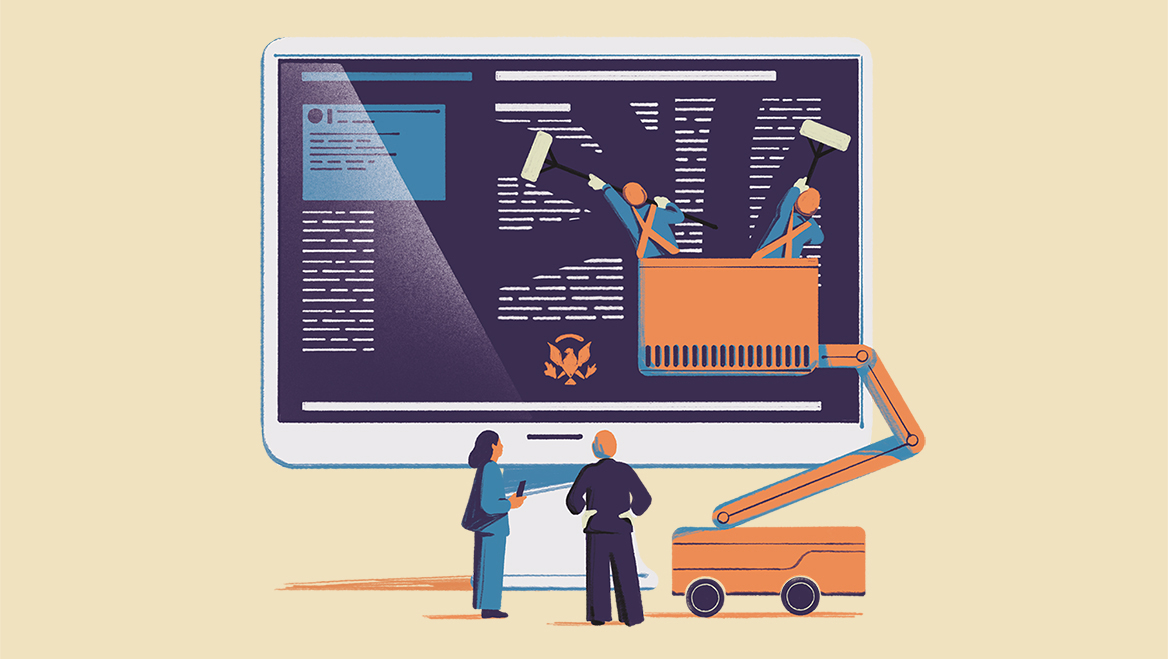
Lack of reliable data directly impacts planners in decision-making, processes, and maintaining trust with their communities. Illustration by Borja Bonaque.
6. Disappearing data has real-life consequences
Data is an integral part of many planning processes, and while it is gathered from myriad sources, federal data collection has long been vital for policymakers, businesses, nonprofits, and more. This longstanding data gathering practice was disrupted, however, when the new presidential administration took office in 2025, and paused, terminated, or removed several federal datasets. The administration also wants to change how certain datasets, like the decennial census, are collected.
While some of the data collections have intermittently been made public again — often by nonprofits and universities — this environment has created an avalanche of misinformation, given rise to conspiracy theories and public distrust, and may impact hazard and risk communications.
Impact for Planners: The lack of reliable data directly imperils the ability of local planners to develop plans that are based on sound data. This can have dire consequences for decision-making, as well as hazard and risk communication.
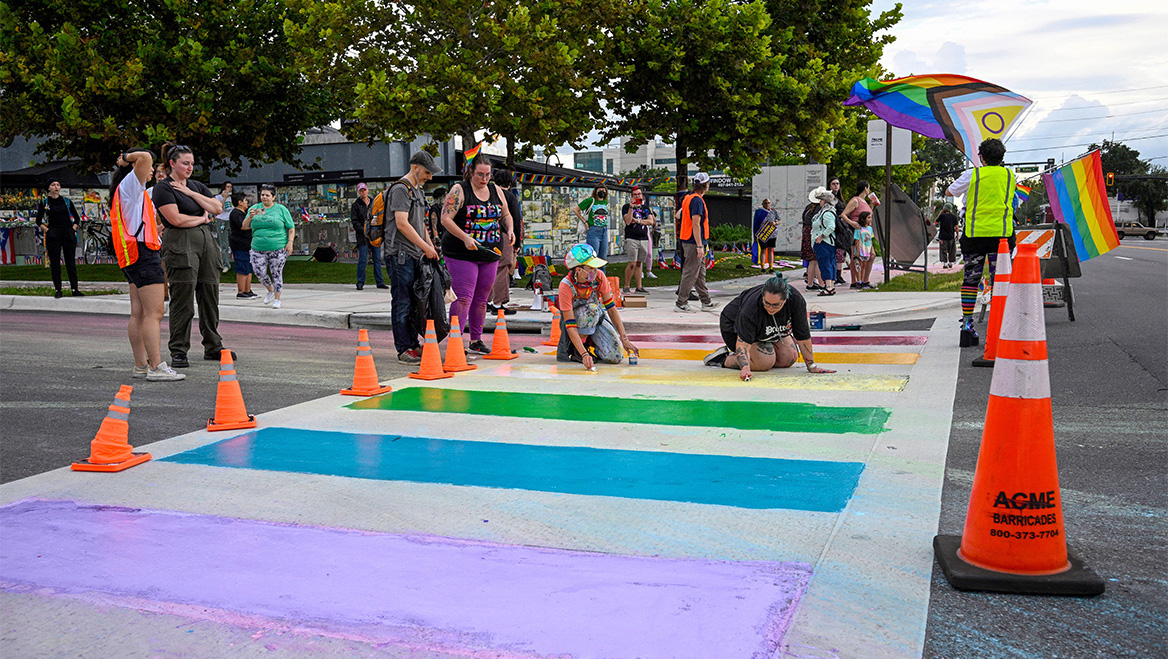
Protesters in Orlando, Florida, use chalk to restore a crosswalk memorializing victims of the Pulse nightclub shooting. The state removed the original to align with a federal transportation policy announced in August 2025. Photo by Phelan M. Ebenhack.
7. Rights, culture, and communities at risk
Federal actions targeting vulnerable groups are weakening local culture. The administration has advanced policies that explicitly undermine LGBTQ+ rights, while increased raids by Immigration and Customs Enforcement and mass deportations have left many residents afraid to go out in public — skipping work, school, medical, and religious events. As fears grow, support for communitywide activities has waned. Other gatherings have been canceled due to safety concerns. These shifts exacerbate distrust in local institutions.
This climate of fear has disrupted daily life and local economies in places like Los Angeles and Chicago, where street vendors have all but disappeared. Beyond economic losses, the social fabric of neighborhoods is fraying as public life retreats behind closed doors. Eroding trust in government directly affects planners' ability to engage communities and build inclusive participation processes. But counter movements have emerged, like in Orlando, Florida, where residents protested the removal of a rainbow painted crosswalk that was a memorial to the victims of the 2016 Pulse nightclub mass shooting.
Impact for Planners: Planners can help rebuild trust by ensuring engagement opportunities are safe and inclusive. For example, they can offer hybrid community meetings and reaffirm local commitments to protect all residents.
The 2026 Trend Report for Planners was written by Petra Hurtado, PhD; Ievgeniia Dulko; Senna Catenacci; and Joseph DeAngelis, AICP. It was edited by Ann Dillemuth, AICP.

This article was developed in partnership with the Lincoln Institute of Land Policy.
RECOMMENDED ARTICLES