

Aug. 27, 2026
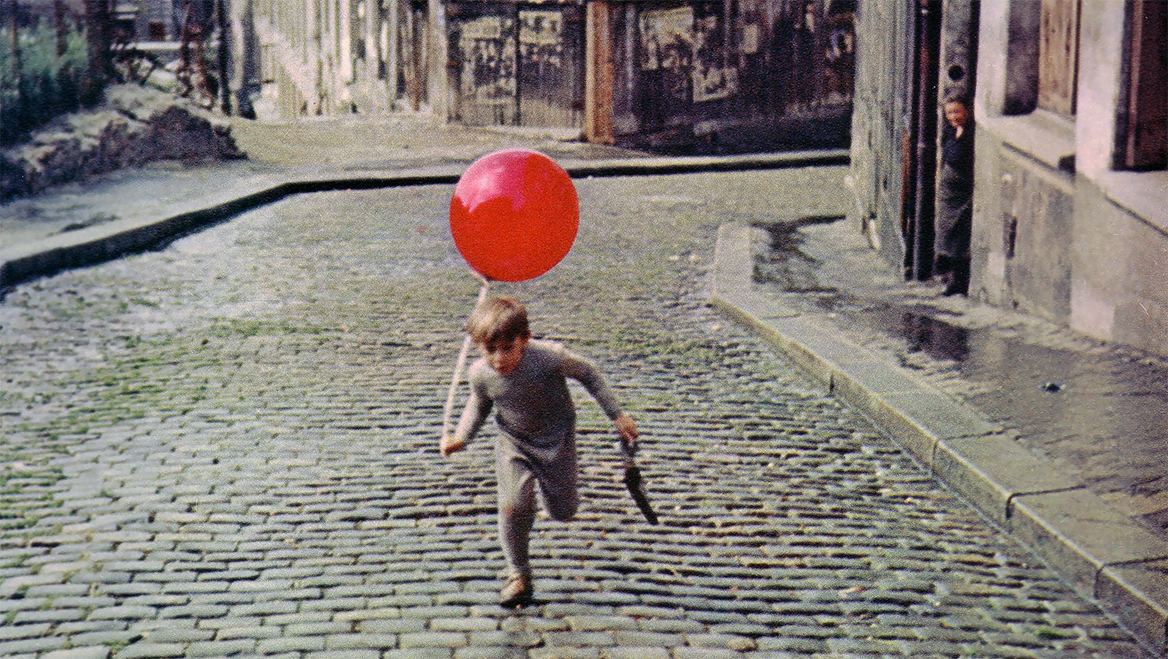
In 1956, the world of cinema was charmed by a whimsical and poignant short film from France, called simply The Red Balloon (Le Ballon Rouge). Written and directed by Albert Lamorisse, the artistic film features a young boy (the director’s son Pascal, just 6 years old at the time), who befriends a magically playful and spirited red balloon on his way to school.
Throughout a delightful 34 minutes, the two romp together around the streets, parks, courtyards, bakeries, and back alleys of post-war Paris, exploring the city and getting into light-hearted mischief along the way. They descend the steep pedestrian staircase of Passage Julien Lacroix, climb Victorian-era light poles and old fences, navigate small obstacles and cute encounters, and disrupt both school and church services before finally confronting a pack of cruel and jealous bullies in a vacant lot, culminating in the story’s enchanting and moving dénouement.
Sadly, the historic Parisian neighborhoods of Belleville and Ménilmontant, which provided the setting for Pascal’s adventure, are now largely gone, demolished or renovated over the intervening years in the name of progress and urban renewal. However, the film still provides a lasting time capsule for these bygone places — and, even more importantly, for a way of life and a time of childhood that seem to have been lost just as fully as the physical locations.
Now, as The Red Balloon celebrates its 70th anniversary and takes a commemorative lap around the art house and festival circuits, the film provides planners with a visual reminder of the independent, free-range urban childhood that was common even in large cities. Over the course of his day, Pascal and his balloon companion wander quite far from home without much adult oversight or attention.
What’s refreshing is how extremely ordinary it seems for children to be alone in the city in the film. This 6-year-old interacts with several adults throughout his day, but no one asks where his parents might be or seems to worry much about him. At one point, he is even told that he can’t ride the bus with the balloon — with no apparent concern from the ticket inspector or the other passengers about how the boy will get to school — and so off he trots, gleefully resolving to race from one neighborhood to the next on his own.
Equally relevant for urban planners watching the film today is how conducive the old-city fabric is for this type of childhood independence. Narrow streets; pedestrian-only shortcuts and walkways; simple transit; and a rich network of shops, stores, pedestrians, and eyes on the street — to say nothing of diversions, entertainments, confrontations, and other opportunities for organic learning experiences — turn the city into a classroom and playground rolled into one.
In recent decades, scholars, planners, educators, and policy-makers have noted these changes, often described as the “diminishing play radius” of children over the past century. A frequently cited 2007 study from the UK illustrates this point: In 1919, an 8-year-old walked alone 8 miles from home to go fishing. Less than a century later, his 8-year-old great-grandson could venture no farther than the end of the street, an area approximately 30 times smaller in radius. By most accounts, the figure is significantly lower for U.S. children today. And rather than representing a safer form of childhood closer to home, researchers have begun to link these changes to both mental and physical health problems.
As for how we got here, and why, there are myriad competing theories, including a shift away from extended family living: We invented the television, the telephone, videogames, and the internet; we paved the world to accommodate cars and parking; urban and rural communities alike became more afraid of gangs, drugs, killer clowns, strangers, friends, and generally other people; and children’s lives became more programmed with homework, ballet, soccer, and gymnastics. Whatever the reason, children have seen their physical and social worlds severely restricted.
Typically, most children’s stories begin with some clever conceit to get the parents out of the picture: Our heroes fall through a rabbit hole, disappear into a magic wardrobe, get a letter inviting them to a magic school, or become strangely well-adjusted orphans after the tragic death of their parents. As The Red Balloon and other tales from an early era of childhood remind us, though, all that was needed once upon a time was a walk out the front door.
The Red Balloon is streaming on most major streaming services.
If you liked The Red Balloon, you may also enjoy …
THE LITTLE FUGITIVE (1953)
When their mother needs to leave town for a few days to care for a sick relative, 12-year-old Lennie is charged with watching his 7-year-old brother, Joey. When a mean practical joke takes a bad turn, Joey runs away to Coney Island, where he explores the beach, gets a job, stays the night, and makes enough money to ride a real pony.
The Little Fugitive is available on most major streaming services.
OLD ENOUGH!
This hit Japanese reality show from the 1990s employed a staged candid-camera-style format to watch young children attempt to run various errands and navigate everyday situations in the city on their own. The results were often amusing, and a good reminder that even if things don’t go as planned, people — even little ones — have an innate ability to work it out.
Old Enough! is now streaming on Netflix.
RECOMMENDED ARTICLES