


Holistic Accessibility
Zoning Practice — August 2025
By Jill Bahm, AICP, Rose Kim
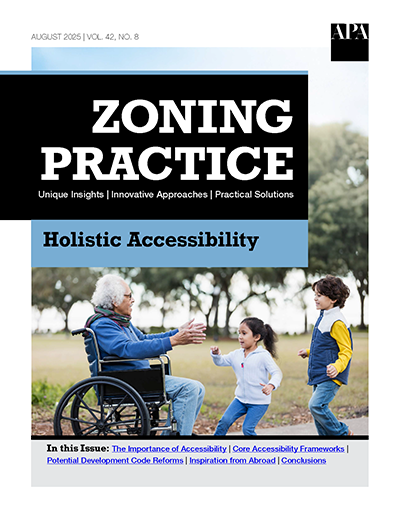
Not a member but want to buy a copy? You'll need to create a free My APA account to purchase.
Create account
Physical accessibility is a fundamental part of building truly inclusive communities, but planners often think the minimum standards set by the Americans with Disabilities Act (ADA) suffice. Instead, it requires a broader, more thoughtful, and holistic approach that anticipates and supports the diverse needs of all community members, at every stage of life, recognizing that our abilities and design needs can change dramatically throughout our lives.
Many communities include the minimum ADA standards for parking spaces in their zoning ordinances and then rely on building codes and engineering standards for other ADA minimums, such as ramp placement and specifications, sidewalks, and signage. Meanwhile, relatively few use zoning to promote universal design or other more holistic concepts of accessibility.
This issue of Zoning Practice explores how zoning and other local development regulations can promote accessible places, spaces, and homes. It begins with an explanation of the importance of accessibility for all communities and a brief overview of common accessibility frameworks before highlighting specific regulatory strategies and inspirational international efforts.
Details
About the Authors
Jill Bahm, AICP
Jill Bahm is a partner at Giffels Webster, a multi-disciplinary land consulting firm with headquarters in Detroit, Michigan. She leads the planning team and works with a variety of communities of all shapes and sizes, each with their own unique challenges and opportunities. One of her specialties is training and education – helping people understand planning and the tools for implementation. Jill has a graduate degree in urban and regional planning from the University of Michigan and sits on the Michigan Association of Planning board of directors. She currently serves as the organization’s professional development officer.
Rose Kim