
Planner Profile: Meet B Danielle Schulte, AICP
Planner Profile is a new series spotlighting the unique experiences of our peers who are making a difference in the profession and at APA.
B Danielle Schulte, AICP, is a senior planner with the Confederated Tribes of the Umatilla Indian Reservation (CTUIR). Based in Pendleton, Oregon, she is also the board president of the Oregon Chapter of the American Planning Association (APA) and a member of the Small Town and Rural Planning and Tribal and Indigenous Planning divisions.
How did you discover planning as a profession?
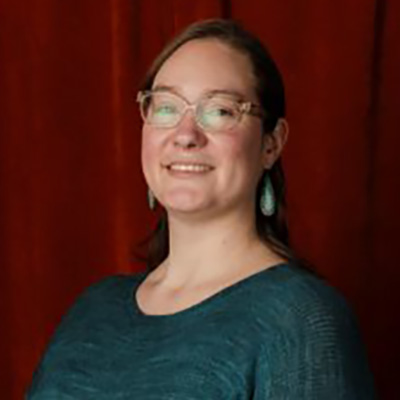
B Danielle Schulte, AICP. Photo courtesy of B Danielle Schulte.
I finished my undergraduate degree at Portland State University and spent two years working in the nonprofit sector in a job I dearly loved, but that did not pay well enough that I could afford my student loan payments on top of a very high cost of living. I was interested in going back to school — I had always been a nerd — and was looking for a graduate program that would allow me to "save the world," working with both the natural environment and the human communities, while also providing a reasonably stable paycheck.
I probably read through program and course descriptions of 30 different graduate degrees and possible careers when I found planning. I found the versatility of it very appealing. It was the only thing that really checked all the boxes of a dream career among the many I considered.
What aspects of your work have you found most fulfilling?
I moved to a very small, rural community to begin my planning career after spending most of my life in mid-sized cities. It was a big change, but one I am so grateful I pursued! Although I am an outsider, I appreciate the many opportunities I've had to be welcomed into the community, to build trust and relationships with CTUIR Tribal members and UIR residents that help me feel confident that the plans I develop are a true reflection of community needs and dreams. I love the process of helping the community figure out the steps to make their goals a reality, whether they are small goals like getting a grant to build a crosswalk or larger, more challenging projects, like identifying the most readily available housing sites.
Is there a project that makes you especially proud?
A month before the COVID-19 pandemic became a crisis, I began in my role as the transportation planner for CTUIR, with fairly little guidance. The folks who would typically train me were occupied with the recovery from a 200-year flood event, followed by the local response to the global pandemic. Without really knowing what to do with myself, I started applying for grants based on the 20-year-old transportation system plan.
I won two grant awards and found myself project managing the construction of two trails that would close a gap in the pedestrian network that cut off most residences from access to the newly built high school. This was a bit like learning to swim by jumping right into the deep end.
Now, we have two new trails in the middle of the reservation's densest residential area. The head of the CTUIR government cut the ribbon for the trail, and the Tribal Youth Council attended to celebrate the opening. Today, I see people using the trail constantly, including the high school cross-country team, no longer training on the shoulder of a high-speed rural highway.
In your experience, how is working as a planner on a reservation different from what you might experience working at a municipality?
I interact with urban planners a lot in my role as the APA Oregon president, and when describing our jobs, the difference I notice most is that they specialize, and we generalize. This is typically true of rural planners, as well. However, it's true in spades working for a tribal government, because of the fundamental differences between Indigenous and colonial governance structures. A tribal government often functions as the city, county, state, and nation of its community, all in one place.
It's fairly rare today for tribal communities to be geographically spread out enough to have regional divisions. When we perform all of the functions required at all levels of government to plan the UIR, we find ourselves learning a little bit about a lot, and relying heavily on a network of other tribal staff and expert consultants to inform the work we do to steward the homeland of the Cayuse, Umatilla, and Walla Walla people.
What are you most looking forward to at NPC26?
I love to learn about the places I visit, so I am most looking forward to the Straight Talk tour, as well as exploring the city on my own. The area is known as Waawiiyaataanong, or "Where the River Bends," in Anishinaabemowin. I'd like to learn more about the people who have stewarded the land since time immemorial, so I plan to visit the North American Indian Association of Detroit and the Anishinaabe exhibit at the Detroit Institute of the Arts Museum, hoping to find those stories told by the Indigenous people themselves. Over 30,000 Indigenous people still live in Detroit today, so I will be looking out for Indigenous-owned businesses to support, like the Turtle Island Collectibles area of the Plaza Antiques Mall, Herbal Lodge, Native Blends, Northern Moon Designs, and Michigan Native Photography.
We heard you're an avid hiker. Can you describe your ideal trail?
I love every trail for its own personality. It's an activity that varies with my mood. Some days, I want to go on a trail where there are frequent grassy meadows to lie down and try to find the birds, like the trails around the Emigrant Springs State Heritage Area near my home. Sometimes, I need a challenge, and I want a trail like the sand dunes of Florence, Oregon. We're coming into spring in the Whitman and Umatilla national forests of the Blue Mountains, and this time of year, I am looking for mushrooms ... but I can't tell you where! Those trails can be long or short depending on the spot, and sometimes I come home empty-handed, but it's never a bad day regardless. If we don't bring back mushrooms, my daughter will at least have a few sticks and pine cones to commemorate our adventure.
Want to be the next Planner Profile? Fill out this form to help us get to know you better.