

Uncovering JAPA
Lessons from Rural Community Development
JAPA turns research into action. All APA members have access to JAPA and its full archive.
summary
-
Rural areas are often defined through urban-centered assumptions that can overlook their complexity, strengths, and diverse development pathways.
- In the Journal of the American Planning Association article, the authors conducted an extensive literature review comparing rural planning with rural community development.
- Several lessons and opportunities are offered that planners can learn from rural community development.
Planning has tended to focus on either facilitating urbanization or growth management of rural areas. Over the past century, regional planning has shifted from including rural community and economic development to its current emphasis on metropolitan coordination. As a result, rural concerns were left behind in planning processes.
Planners serving rural communities can be left in the lurch thanks to the U.S. planning field's bias toward urban interests, formal processes, comprehensive planning, and regulations. Many rural places are stressed and contested over issues such as climate change and demographic shifts. This contributes to animosity between rural and urban areas.
Comparisons with Rural Planning
Where rural planning struggles to influence and garner support in rural areas, the field of rural community development excels. Rural community development offers contrasting emphases on social and economic concerns, informal processes, capacity building, project implementation, voluntary actions, and non-governmental partners.
In "What Can Rural Planning Learn from Community Development? Some Lessons Moving Forward." (Journal of the American Planning Association, Vol. 92, No. 1), Kathryn I. Frank and Michael Hibbard draw on lessons from rural community development to help rural planners.
Rural community development and rural planning have many differences. The authors compare the two fields and offer up lessons learned through three lenses: substantive, procedural, and institutional. This blog focuses on the procedural values, procedural models, and procedural strategies. To see the full comparison of all three lenses, APA members can access the full JAPA article for additional recommendations on applying these approaches in practice.
Procedural Rural Community Development
With roots in the late 1800s, rural community development arose from three main focuses: antipoverty social work and economic development; agricultural extension and adult education; and holistic rural studies and outreach. These sources offered both top-down and bottom-up models of development.
While the deficit-based perspective of technical assistance remains prominent in both community development and planning, other models are less familiar.
The power–conflict approach is a procedural model characterized by bottom-up political mobilization among underserved communities, often guided by a facilitator or community organizer. This approach responds to specific problems with the goal of achieving radical reform. These elements are evident in radical and insurgent planning practices that emerged in the late 1960s and later spread through the global South. However, the authors note the absence of literature on insurgent planning in rural communities in the United States and elsewhere in the global North.
Rural community development also features the models of technical assistance, self-help, as well as the appreciative inquiry model, which is entrepreneurial and asset based. Appreciative inquiry uses needs assessments and asset mapping to integrate many kinds of community assets: natural, cultural, human, social, political, financial, and built. Increasingly, this approach is adopted in international development work. Local economic development planning overlaps with this model but primarily assumes an urban context and refers less to community assets.
Collaboration Encouraged
In 1970, Alan J. Hahn published "Planning in Rural Areas" in the Journal of the American Planning Association. Hahn proposed collaboration between rural planning and rural community development, writing, "Planning programs in rural areas often fail to respond to the informal nature of rural government ... [and have] misconceptions of rural conditions, problems, and people." With tensions rising between rural and urban communities, Hahn's criticism continues to push planners to listen to and learn from the successes of rural community development.
Planning scholarship and professional reflection can help practitioners navigate these tensions. More deeply, the field of planning can help address the larger structural issue of chronically insufficient government support for rural and social equity.
Recommendations for Rural Planners
The authors provide the following recommendations to rural planners, below are a few highlights offered in the article that cover substantive, procedural, and institutional elements:
-
Support local wealth-building by removing regulatory barriers to local enterprise, protecting access to natural resources, and enabling community-owned infrastructure.
-
Expand and maintain relationships by offering access to you, perhaps through a rotating office location.
-
Take a place-based approach that responds to the issues that matter most to rural communities.
-
Monitor progress toward community-defined goals.
-
Asset mapping, community visioning, rural design charrettes, and games can help transparently co-create strategies with community.
-
Communicate widely through social media using plain, politically neutral language.
-
Offer planning-related educational programs for grant writing, leadership development, and planning literacy.
-
Strengthen ties with rural nonprofits, community organizers, rural development hubs, and other intermediaries.
-
Adopt flexible and non-statutory policies, such as zoning overlays, pilot projects, market-based programs, and voluntary agreements.
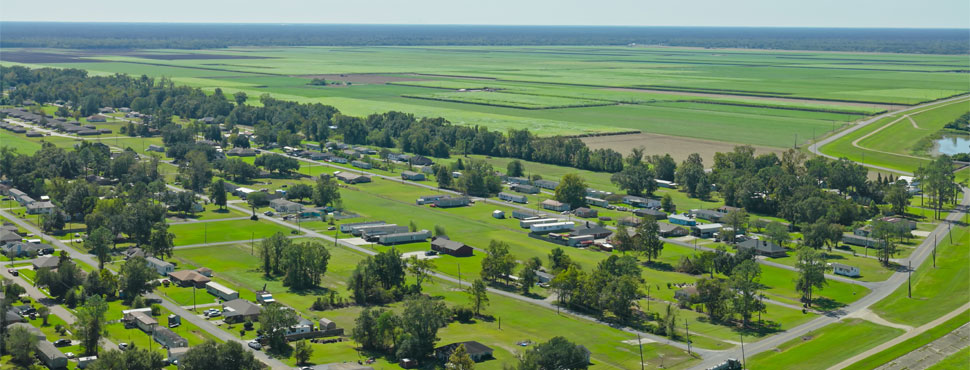
Top image: Photo by iStock/Getty Images Plus/ halbergman
ABOUT THE AUTHOR