

Data Inaccessibility
About This Trend
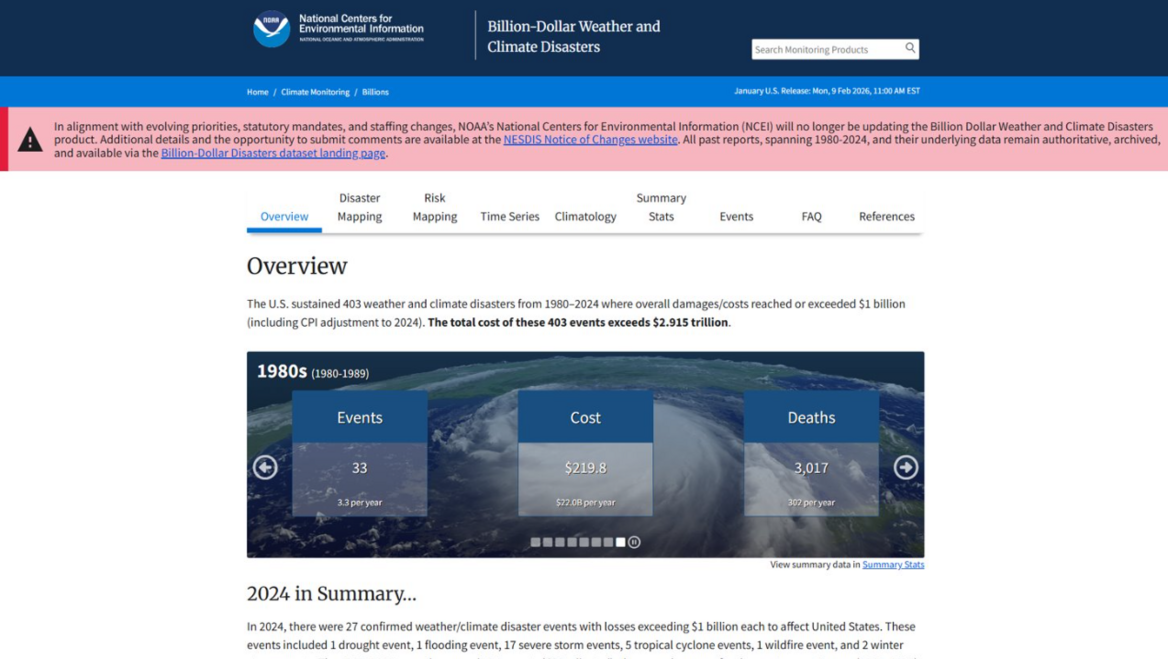
Federal data is an integral input underlying many planning processes. In 2025, many federal datasets were paused, terminated, or taken offline. Alongside the environmental deregulation of that year, climate data became a focus for elimination. Terminated or targeted programs include the billion-dollar disasters database (though a nonprofit now tracks this), National Park Service research, the EPA’s Greenhouse Gas Reporting Program, NOAA’s long-term climate modeling, Hawaii’s Mauna Loa climate observatory, and a carbon-monitoring satellite.
The fate of health data is also uncertain. After a February 2025 purge of CDC data, some websites were brought back online, though other programs remain suspended. The closure of USAID ended support for certain global health data surveys, CDC layoffs halted work on a new data system tracking injuries and violence, and USDA terminated its Household Food Security Reports.
In January 2025, U.S. Census Bureau datasets related to gender identity and sexual orientation went offline, and questions regarding gender identity were subsequently removed from four Census surveys. The departure of experts, cancellation of surveys, and the disbanding of several advisory panels have further endangered Census operations.
While some organizations are stepping in to fill data collection gaps, experts worry about developing an overreliance on the private sector. Nonprofits and universities are also working to preserve datasets, and planners may want to look for data at the state and local levels if available in their communities.
Trend Reports