
-

What Happens When Women Design for Women? Researchers Found Out.
A team in Sydney, Australia, turned a once‑ignored green space into a data‑backed case study of how inclusive design reshapes public spaces.by: Natalie Missakian February 12, 2026A team in Sydney, Australia, turned a once‑ignored green space into a data‑backed case study of how inclusive design reshapes public spaces. -
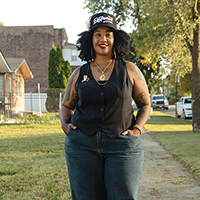
Challenging Perceptions of ‘Don’t Go’ Neighborhoods Can Create Opportunities
By pushing back, planners may boost housing supply and economic development in Chicago and other historically segregated cities.by: Pete Saunders, AICP October 28, 2025By pushing back, planners may boost housing supply and economic development in Chicago and other historically segregated cities. -

Inside the Urban Institute’s New Tool for Building Equity
With point-based data, cities are creating maps of how well services match their community’s needs, block by block.by: Elissa Chudwin July 24, 2025With point-based data, cities are creating maps of how well services match their community’s needs, block by block. -

How Word Choice Builds More Inclusive Communities
Rethinking the language we use can foster trust and make people feel welcome.by: Jon DePaolis February 10, 2025Rethinking the language we use can foster trust and make people feel welcome. -
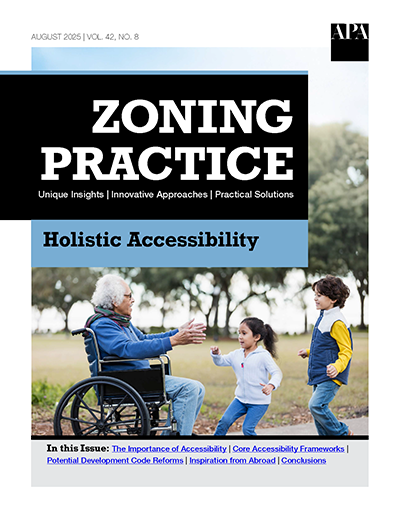
Holistic Accessibility
Zoning Practice — August 2025by: Jill Bahm, AICP, Rose Kim August 01, 2025This issue of Zoning Practice explores how zoning and other local development regulations can promote accessible places, spaces, and homes. It begins with an explanation of the importance of accessibility for all communities and a brief overview of common accessibility frameworks before highlighting specific regulatory strategies and inspirational international efforts.List Price$10.00ZP Subscriber$0.00 -

When Driving is Not an Option
It’s time to recognize and listen to the 25 percent of the U.S. population that doesn’t drive, says author Anna Letitia Zivarts.by: Steve Wright September 05, 2024It’s time to recognize and listen to the 25 percent of the U.S. population that doesn’t drive, says author Anna Letitia Zivarts. -

What Now for Communities and the Unhoused?
Planners find solutions even before the recent Grants Pass Supreme Court decision.by: Daniel Vock July 02, 2024Planners find solutions even before the recent Grants Pass Supreme Court decision. -

As Gayborhoods Shrink, Pop-Up LGBTQ+ Spaces Can Build Inclusive Communities
Events are meeting queer people where they are. Here’s how planners can open doors to more.by: Aaron Greiner May 30, 2024Events are meeting queer people where they are. Here’s how planners can open doors to more. -

The New Math of Climate Resilience
A groundbreaking project in Norfolk, Virginia, multiplies the impact of a $112 million federal grant by making social vulnerability and environmental justice, not just property values, major factors in its calculations.by: Jim Morrison April 18, 2024A groundbreaking project in Norfolk, Virginia, multiplies the impact of a $112 million federal grant by making social vulnerability and environmental justice, not just property values, major factors in its calculations. -

4 Tools to Empower Data-driven Planning for Climate and Transportation Equity
Planners can take advantage of the national focus on infrastructure investments to enhance mobility and climate resilience for underserved communities.by: Kelly Dunn, David Wasserman, AICP July 27, 2023Planners can take advantage of the national focus on infrastructure investments to enhance mobility and climate resilience for underserved communities. -

How Cellphone and Fitness App Data is Helping Create Equity in Public Parks
Park planners harness novel data sources and tools to direct equitable conservation, amenities, and access.by: Clement Lau, FAICP July 20, 2023Park planners harness novel data sources and tools to direct equitable conservation, amenities, and access. -

Equitable Zoning for Manufactured Housing
Zoning Practice — April 2024by: George Frantz April 01, 2024This issue of Zoning Practice examines the persistent inequitable treatment of manufactured housing in many local zoning codes and offers considerations for code updates. It begins with brief summaries of the important role manufactured housing plays in supporting housing choice and affordability and includes findings from a five-state analysis of zoning regulations for manufactured housing.List Price$10.00ZP Subscriber$0.00 -

3 Essential Tips for Planning with Multilingual Communities
Community engagement experts offer tested approaches that prevent tokenism, create trust, and foster a sense of belonging.by: Rebecca Greenwald June 09, 2023Community engagement experts offer tested approaches that prevent tokenism, create trust, and foster a sense of belonging. -

Why We Need Queer Urbanism
Heteronormative planning structures exclude and can even endanger queer people, especially those who are trans and BIPOC.by: Aaron Greiner May 19, 2023Heteronormative planning structures exclude and can even endanger queer people, especially those who are trans and BIPOC. -

Equitable Community Engagement Requires Learning, Self-Reflection, and Transparency
Five ways planners, engineers, and other allied professionals can establish a long-term, measurable approach to equitable planning.by: Jennifer Fierman, AICP, Kristof Devastey, PE, PTOE, PTP, Lindsay Welsch Sveen, PhD March 23, 2023Five ways planners, engineers, and other allied professionals can establish a long-term, measurable approach to equitable planning. -

Advancing Equity, Diversity, and Inclusion in the Planning Profession Is an Evolving Journey
The Equity in Zoning Policy Guide and Equity in Practice case studies from the American Planning Association help planners move forward on EDI.by: Roberta Rewers February 23, 2023The Equity in Zoning Policy Guide and Equity in Practice case studies from the American Planning Association help planners move forward on EDI. -

Hurricane Recovery Fails the Financially Vulnerable
Based on a decade of data from Hurricane Sandy, two New York City planners explore the inequities of disaster mitigation and recovery — and what needs to change to prevent climate gentrification.by: Donovan Finn, PhD, Thaddeus Pawlowski September 30, 2022Based on a decade of data from Hurricane Sandy, two New York City planners explore the inequities of disaster mitigation and recovery — and what needs to change to prevent climate gentrification. -

Transportation Strategist Naomi Doerner Navigates Mobility Justice
How the country's first transportation equity manager is building a framework to protect the fair and safe movement of people of color.by: Sophia Burns August 31, 2022How the country's first transportation equity manager is building a framework to protect the fair and safe movement of people of color. -

Planning Accessible Communities
PAS Memo 117by: Jeannine Godwin, AICP July 01, 2023This PAS Memo explains the importance of planning and designing truly inclusive communities that engage people with disabilities and meet their accessibility and mobility needs.List Price$10.00Member$0.00 -

How to Uncover and Honor LGBTQ+ History in the Built Environment
Kentucky and Maryland are the first states to use historical context studies to highlight places influential to the LGBTQ+ community — and drive planning efforts.by: Tatiana Walk-Morris May 20, 2022Kentucky and Maryland are the first states to use historical context studies to highlight places influential to the LGBTQ+ community — and drive planning efforts. -

A Passion for Planning and Social Justice
AAPI planner Chancee Martorell talks about raising the visibility of Thai and other immigrant communities, the three Ps of affordable housing, and dedication to “unwavering principle over political expediency.”by: Tippe Morlan, AICP April 28, 2022AAPI planner Chancee Martorell talks about raising the visibility of Thai and other immigrant communities, the three Ps of affordable housing, and dedication to “unwavering principle over political expediency.” -

What Planners Need to Know about Big Data
Five applications and considerations to help you get started — and prioritize equity and privacy.by: Alexsandra Gomez April 18, 2022Five applications and considerations to help you get started — and prioritize equity and privacy. -

A Community-Powered Plan for Cultural Preservation
From land to language, how Hilton Head Island's Gullah Geechee residents are working with planners to save their culture after generations of displacement.by: Philip Walker, FAICP October 14, 2021From land to language, how Hilton Head Island's Gullah Geechee residents are working with planners to save their culture after generations of displacement. -

7 Trends Knocking at the Planning Office Door
In today’s complex world, balancing everyday activities, near-term plans, and visioning for the future is more challenging than ever. APA Foresight has got you covered.by: Petra Hurtado, PhD, Alexsandra Gomez July 08, 2021In today's rapidly changing world, it can be tough to stay abreast of all the challenges facing planners. This article explores seven of the most pressing trends for the profession and what they could mean for your community. -

Dementia-Friendly Public Participation
Accessible public engagement tools are key to ensuring the built environment meets the needs of community members with dementia and other disabilities.by: Samantha Biglieri, PhD, M.Pl. June 17, 2021People living with dementia have the right to be included in the communities in which they live. Fortunately, there are several easy, low-cost accommodations practicing planners can make to better engage them in the planning process. -

6 Ways to Help Bridge the Racial Wealth Gap
Planners can and should play a pivotal role in advancing equitable economic outcomes.by: Karen Kazmierczak March 01, 2021Planners might not always have the authority to redirect funding to historically neglected communities, but they can still play a pivotal role in advancing more equitable outcomes. Here are six ways to get started. -

Planning Accessible Communities
PAS Memo 117The ADA self-evaluation and transition plan process is a vital first step in addressing the accessibility of both the built environment and municipal programs and services to create truly inclusive communities. -

Equity-Oriented Performance Measures in Transportation Planning
PAS Memo — March/April 2020Planners are now more clearly recognizing the impacts of a half-century of inequitable, auto-oriented planning as well as the outcomes resulting from structural racism. To rectify current inequities, which are a legacy of many years of cumulative decisions, planners must work proactively to improve communities that have historically experienced disinvestment and negative impacts. -

More and Better: Increasing Diversity, Equity, and Inclusion in Planning
PAS Memo — May/June 2019Overcoming old-school institutional and structural practices used to design cities requires new approaches to urban planning with intentional approaches to seeking diversity, equity, and inclusion (DE&I). There are many ways to approach this work, but the primary — and perhaps the most critical — is within the profession. -

Three Essential Questions for Better Planning
PAS Memo 110by: Kyle Ezell, FAICP CUD February 01, 2022This PAS Memo introduces three essential planning questions that help planners ensure their work benefits as many people as possible, negatively impacts as few people as possible, and includes as many people as possible.List Price$10.00Member$0.00 -

Eliminating Racial Segregation Is Good Economic Policy
Income disparities and racial segregation are deeply intertwined, burdening both people of color and the U.S. economy. Here's how we can reverse that trend.by: Tatiana Walk-Morris January 01, 2021More than half a century after the Fair Housing Act outlawed policies like redlining, racial segregation continues to plague the U.S. -

Ending Zoning’s Racist Legacy
Zoning Practice — January 2022by: Jennifer Raitt January 01, 2022This issue of Zoning Practice summarizes how exclusionary zoning practices reinforce patterns of segregation originally established by illegal racial zoning, racially restrictive covenants, and federal policies in the first half of the 20th century. And it highlights steps Boston and Louisville, Kentucky, have taken to begin to rectify these inequities through zoning reforms.List Price$0.00ZP Subscriber$0.00 -

Advancing Racial Equity Through Land-Use Planning
PAS Memo — May-June 2021by: Paul Mogush, AICP May 01, 2021This edition of PAS Memo explains how the city of Minneapolis addressed racial equity issues in their comprehensive planning process and became the first major U.S. city to eliminate single-family zoning.List Price$10.00Member$0.00 -

Partnering with Health Systems on Affordable Housing Investments
PAS Memo — March-April 2021by: Alyia Gaskins March 01, 2021The March/April 2021 edition of PAS Memo explains why and how planners can partner with hospitals and health systems to create more equitable communities through affordable housing development.List Price$0.00 -

Zoning, Land Use, and Local Policies for Environmental Justice
Zoning Practice — March 2021by: Ana Baptista March 01, 2021This issue of Zoning Practice reviews the relationships among zoning, land use, and environmental justice. It highlights local strategies that illustrate the diversity of approaches cities and counties across the country are using to protect traditionally overburdened areas from noxious land uses.List Price$10.00ZP Subscriber$0.00 -

Equitable Zoning for Manufactured Housing
Zoning Practice — April 2024This issue of Zoning Practice examines the persistent inequitable treatment of manufactured housing in many local zoning codes and offers considerations for code updates. It begins with brief summaries of the important role manufactured housing plays in supporting housing choice and affordability and includes findings from a five-state analysis of zoning regulations for manufactured housing. -

An Equitable Approach to Zoning Notifications
Zoning Practice — May 2024This issue of Zoning Practice looks at increasing the equity of public notice practices by expanding upon the Equity in Zoning Policy Guide’s recommendations. It examines key equitable or inequitable aspects of conventional notification practices and highlights potential new methods of notice that may enhance procedural and distributional equity. -

Sensory Zoning for Neuroinclusive Cities
Zoning Practice — February 2026This issue of Zoning Practice introduces sensory zoning as a new framework to foster neurologically inclusive communities. It begins by exploring how sensory characteristics of the built environment and standard public participation methods present barriers to neurodivergent individuals before outlining a phased strategy of regulatory reform, sensory-aware design, and authentic co-creation. -

Zoning Alternatives to Penalizing Homelessness
Zoning Practice — January 2026This issue of Zoning Practice explores regulatory alternatives to criminalizing homelessness. Following a discussion of the state of homelessness and the costs of criminalization, it outlines zoning and land-use-based solutions that balance the rights of the unhoused with a jurisdiction’s duty to promote public health, safety, and welfare. -

Holistic Accessibility
Zoning Practice — August 2025This issue of Zoning Practice explores how zoning and other local development regulations can promote accessible places, spaces, and homes. It begins with an explanation of the importance of accessibility for all communities and a brief overview of common accessibility frameworks before highlighting specific regulatory strategies and inspirational international efforts. -

Equity-Oriented Performance Measures in Transportation Planning
PAS Memo — March-April 2020by: Audrey Wennink, Agustina Krapp March 01, 2020The March/April 2020 PAS Memo examines the use of equity-based performance measurement criteria in the transportation investment prioritization processes of metropolitan planning organizations and makes recommendations for improving these practices.List Price$10.00Member$0.00 -

Integrating Gender Mainstreaming into U.S. Planning Practice
PAS Memo — November-December 2019by: Sherry Ryan November 01, 2019The November-December 2019 PAS Memo introduces the concept of gender mainstreaming, describes how it has been used in the European context, and explores how it could — and why it should — be integrated into U.S. planning practice.List Price$10.00Member$0.00 -

A Framework for Promoting Equity Through Zoning
Zoning Practice — July 2019by: Elizabeth Garvin, AICP July 01, 2019This issue of Zoning Practice discusses why modern zoning has not produced equitable outcomes, identifies development outcomes that would be more equitable for local communities, and highlights broad opportunities for zoning reforms to support those outcomes.List Price$10.00ZP Subscriber$0.00 -

4 Steps to Creating Inclusive, Anti-Racist Third Spaces
Help community connections flourish.December 01, 2020Four tips for defining and designing public outdoor third places to be intentionally inclusive, community driven, and anti-racist. -
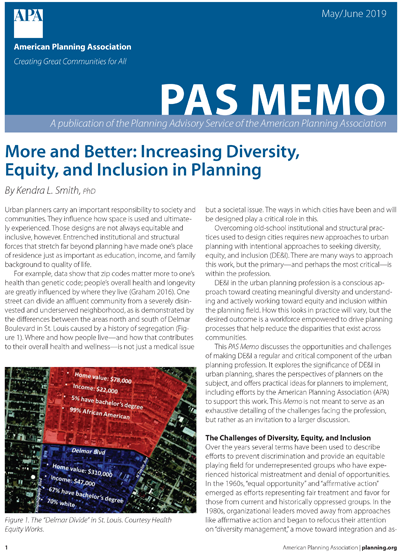
More and Better: Increasing Diversity, Equity, and Inclusion in Planning
PAS Memo — May-June 2019by: Kendra Smith May 01, 2019The May-June 2019 issue of PAS Memo discusses the opportunities and challenges of making diversity, equity, and inclusion regular and critical components of the urban planning profession.List Price$10.00Member$0.00 -

Five Ways to Plan for More Accessible Housing
At least 25 percent of U.S. residents will experience a disability that impacts their daily life. How can we better prepare America's housing stock?November 01, 2020Here are five best practices and tools to help planners support move-in-ready accessible housing. -

Fair Housing Is More Important Than Ever
Zoning Practice — December 2018by: Donald Elliott, FAICP December 01, 2018This issue of Zoning Practice reviews the basics of fair housing law, two recent developments in fair housing, and discusses practices to help close the gap between the current reality and the ideal of fair housing.List Price$10.00ZP Subscriber$0.00 -

Confronting Systemic Inequity With Institutional Change
New initiatives and offices are pushing for more equitable policy outcomes — and holding cities accountable for the impacts of their decisions.July 01, 2020Planning and other city departments are creating initiatives and offices to institutionalize racial and income equity and justice concerns. -

Mind the Gender Gap
Planned mostly by and for men, transit in the U.S. has long failed its most loyal customers: women. But increasing efforts in focused data collection and gender mainstreaming are working to remedy those failures.February 01, 2020In the U.S., women account for more than half of all transit ridership, yet their travel patterns and preferences have rarely been accounted for in planning efforts — or even measured. -

Planning for Equitable Development: Social Equity by Design
PAS Memo — March-April 2017by: Carlton Eley March 01, 2017The March/April 2017 issue of PAS Memo highlights the importance of equitable development in creating strong and sustainable communities for all and provides principles and guidance to help planners implement social equity in their communities.List Price$10.00Member$0.00
Showing 1 - 50
of 60
Next >